Showing posts with label other science stuff. Show all posts
Showing posts with label other science stuff. Show all posts
Wednesday, August 17, 2011
Wordless Wednesday: Scientific Americam Special Cities Issues


Wednesday, July 27, 2011
Wordless Wednesday: I'm the luckiest nerd in the world

The University of Missouri - St. Louis Newsletter came out today and it included a feature of my recent exploits as a blogger for the Scientific American Blog Network. If you haven't checked out the new science blogging network, then please do so. It is awesome and I'm in the company of many other awesome online science communicators. And also 'sign up' that way you can leave comments.
And I also got some really, REALLY exciting news: I have a post-doctoral research position with the awesome and amazing Dr. Alex Ophir at Oklahoma State University. Alex & I go waay back, researching voles and social behavior. He's started this awesomesauce research endeavor the Giant Pouched African Rats (of Tanzania) and the questions were right down my alley. I was like, "Hey Alex, you know I'm all about the individual differences, behavioral variation, maze running, field biology, and mammalogy?" So some
Details of everything will come. In the meantime, check out the recent posts from the conference at the Scientific American blog.
Sunday, May 22, 2011
Summer of Science Book Reading Club kicks off May 23, 2011
Hey parents/grandparents/summer camp mentors!
Looking for fun yet academically engaging things to do with your young ones and teens this summer? Want to make sure they don't lose step and let all of that great knowledge slip out of their heads. Want to keep them on task with reading and literacy? Want to subtly kindle that inner science/engineering/tech spirit in them?
Well check out this super great summer reading program by SCIENTICITY, this amazing online community of people who promote the public understanding and engagement of science. They host a variety of science engagement programs, but the youth reading program is their summer emphasis.
There are actually two programs, broken down by age group.
1) Kids Read Science - for children ages 8-12 years of age
2) Teens Read Science - for teens 13-18 years of age
The rules for both are the same:
1. Choose a non-fiction book about nature, science, engineering, or math, or about people who work or worked in those fields. The book should help you understand more about what science is and how it works. Textbooks are not acceptable choices. If you need suggestions it's good to ask a science teacher or librarian for ideas.
2. Read your book.
3. Make a video about your book. It's like a video book report. The video must be less than 5 minutes long, and you must give the name of the book, the name of the author, and reasons why you would or would not recommend the book to your friends.
4. Post the video online. They prefer that you post it to your own account on YouTube.com and tag it with "KidsReadScience2011" or "TeensReadScience2011". There are other posting options in the long form of the rules. Visit the website for more details of both reading events.
5.Fill out our official online submission form, for Kids Read Science or Teens Read Science. This allows the judges to locate your video and they will know how to contact you if you win one of the fabulous prizes. Sorry, so far only US residents are able to win prizes this year.
6. Do all this before the deadline: 11pm (CDT) on 23 September 2011.
When I was a kid I participated in summer reading programs sponsored by our city library. I loved them! It was the highlight of my summer. At the end of the summer the library branch threw a party for all of us kids and had an award ceremony. Prizes were awarded to children in different age groups who read the most books. I was so competitive. Although children and teens who submit videos are competing nationwide for prizes, there is no reason not to reward students locally for participating in this event, and it doesn't have to be fancy or anything. Just something to keep them encouraged and let them know they are supported.
And why should the kids and teenagers have all of the fun? SCIENTICITY also hosts a Science Book Challenge for adults. Read three science related books and drop them a note telling them how you liked each book and they'll post your book reviews for others to see. That's it.

And if you're not sure what to read or where to get started, check out my blog posts about great science literature I've read - for youth, teens, and adults.
Happy reading!
Tuesday, April 12, 2011
Yuri Night - Celebrating 50 years of human space flight

Today marks the 50th anniversary of the very first human space flight, April 12, 2011. On this night, 50 years ago, Russian Cosmonaut, Yuri Gagarin completed an orbit around the earth. He became an instant international celebrity and a heor of the Soviet Union. Today, space flight and exploration isn't as new as it was then, but it's stilll exciting! Everybody's doing the moonwalk.
There's a celebration event here in my town, St. Louis, Missouri; but it's a worldwide party and you are invited. Ir create your own impromptu event like go outside and enjoy the beautiful night sky - alone or with friends and family.
You can also make a video about why you're excited about Yuri's Night. Say something cool about science, engineering, space and planetary science, and you could be the winner of the YURI'S NIGHT 2011 VIDEO CONTEST. The Yuri’s Night 2011 Video Contest is an open source competition to engage the public to create tribute videos for the 50th Anniversary of Human Spaceflight to share at Yuri’s Night events around the world. As more videos become available they will be posted on this website and notifications will be circulated via Facebook and Twitter @YurisNight.
Learn more about Yuri Gagarin at these links.
Yuri's Night
Biography of Yuri Gagarin, via Wikipedia.
Yuri Gagarin's space flight 50th anniversary: the view from Russia, includes video
Yay! Space Exploration!
 |
| Me, next to Space Exploration Patches, Boeing Museum taken at Boeing, St. Louis, Missouri - the Engineering company that designed and/or built most US space travel vehicle and equipment |
 |
| Skylab Patch at the Boeing Museum |
 |
| Commemorative glassware for US Space Flight, Boeing Museum |
 |
| Model of US Space Shuttle, Boeing Museum |
I know, my science geekiness surprises me, too.
See you outside, and tell me all about yur Yuri Night celebration!
Thursday, April 07, 2011
In Memorium: Jenni M. Higashiguchi

Jenni Malie Higashiguchi, a doctoral student in biology at the University of Missouri-St. Louis, was born in Hawaii on March 24, 1981, and passed away on April 4 after a brief but catastrophic illness.
Jenni received her undergraduate degree in biology from the University of Hawaii, where she studied some of the Hawaiian forest birds that occur nowhere else. She joined the large number of researchers interested in understanding why so many Hawaiian forest birds have become extinct.
She joined the PhD program in Evolution, Ecology, and Systematics in the Department of Biology at the University of Missouri-St. Louis in 2007 to work with Patricia Parker, the E. Desmond Lee Endowed Professor of Zoological Studies. Working with Parker's group she applied what was learned in Hawaii in order to help Galapagos birds escape the same sad fate.
She had identified the study of the mosquito vectors of bird diseases as a critical piece of the puzzle that she would solve, and one that would contribute importantly to the goal of preventing extinctions of Galapagos birds.
She was in her third Galapagos field season, and second on this project, when she fell ill. Parker said the mosquitoes Jenni caught before her illness may provide the understanding that will help preserve the birds in one of nature's most famous wild places.
Jenni was brought to Miami for treatment, and then to Cleveland, where she passed away. She did not have any infectious diseases, but died of acute liver failure of unknown cause.
"Jenni Malie Higashiguchi was a gentle and caring person who would make beautiful leis for her student colleagues in celebration of each of their successes and bring delectable homemade sushi to any gathering," said Parker. "She always preferred talking in person to email or phone and we will forever continue to see her face peeking around our doors. Her contributions to UMSL and to Galapagos have been enormous."
She is survived by her parents, Owen and Carol Higashiguchi of Makawao, Hawaii. She is also survived by all of the members of the UMSL biology community who regard her as part of their own family.
I didn't know Jenni very well, but I was aquainted with her. That's what often happens when fresh new students start a program and a few
A fund has been created in her name at the Whitney R. Harris World Ecology Center. Memorial donations should go to: Jenni Malie Higashiguchi Fund of the Whitney R. Harris World Ecology Center, at the University of Missouri-St. Louis, One University Blvd., St. Louis, MO 63121.
Friday, February 18, 2011
When was the last time you visited a science center or museum?
I'm in Washington, DC now. I'm in town for the AAAS (Science Magazine) conference. I love science conferences and I love this gathering in particular. It's the world's largest science conference and an inter-disciplinary mix of scientists, social scientists, engineers, educators and science-tech policy makers . The energy is amazing. Nerd heaven, I say. Nerd heaven, indeed.
And on February 16 and 17, 2011, I attended the first ever International Public Science Events Conference, a pre-conference gathering of outreach scientists, science educators (formal & informal) and related institutions. We shared ideas, successes, and challenges to promoting science and engineering to the general public - you - via small and large events and celebrations. I co-moderated a workshop on Broadening Participation with the incomparable and kindred Madhu Katti of Reconciliation Ecology.
 |
| Me with Madhu Katti |
All the conference participants shared ways to make our science meet-ups,science cafes, science cabarets, and science events more accessible and engaging. That was the objective of the entire pre-conference. Then as I listening to Dr. Dennis Wint, President and CEO of The Franklin Institute, Philadelphia, PA, discuss how and why science centers/museums matter in public engagement, I began to wonder...How important is science and math education to people who aren't in the business of science or math education. I mean, yeah, I know you think it's important, but how would you articulate that to another parent or community member?
 |
| Me with Dr. Wint of the Franklin Institute |
Then Dr. Wint touched on how science centers/museums are a great science educational resource, sometimes the best thing going if your school system is slashing and burning education in science, math, and arts - like many are. I agree, and I wondered how many people are taking advantage of these continuing education centers?
So I did my own social media poll. When's the last time you, your friends/family visited a science center or museum? Which one? What city? Folk responded on twitter using the hashtag #scicenter.
I got about 20 responses. Most people attended fairly recently (within the last few months, I assume spending family time over the holiday). Here's a summary of responses.
- MIT Museum for opening of MIT150 exhibit
- Ontario Science Center in Toronto
- Franklin Institute in Philadelphia!
- American Museum of Natural History in NYC x2
- Science Centers of San Jose, Philadelphia and Cleveland
- Science Museum & Childrens Museum of Atlanta
- Hong Kong Science Museum for the exhibition "Marvelous Inventions of Leonardo da Vinci"
- Liberty Science Center Jersey City, NJ
- Discovery Centre in Halifax, Nova Scotia
- National Space Center Leics, UK.
- Science Museum, London x2
- Natural History Museum, London x2
- North Carolin Museum of Natural Sciences in Raleigh-Durham
- Museum of Life + Science in Raleigh-Durham, North Carolina
- Fels Planetarium (Part of the Franklin Institute, so it gets another tally)
- St. Louis Science Center x4 (my backyard)
- McAuliffe-Shepard Discovery Center Concord NH
- Smithsonian Museum of Natural History in DC
- The Field Museum of Natural History in Chicago
- Cape Fear Museum in Wilmington, NC (they have a giant ground sloth skeleton)
- Taupo Vocano Centre in New Zealand
- Museum of Science and Industry in Chicago
also got some Zoo/Aquarium/Botanical Garden responses, too
- North Carolina Aquarium at Pine Knoll Shores
- St. Louis Zoo
- Missouri Botanical Garden
Thursday, January 13, 2011
Discussing The Immortal Life of Henrietta Lacks
Without a doubt, Henrietta Lacks was the most significant contributor to medical science and microbiology. She wasn't a scientist or a doctor. She was a mother and wife and grand-daughter of a tobacco farmer of Clover, Virginia. In February1951, she went to see doctors for what turned out to be cervical cancer at Johns Hopkins Hospital in Baltimore, Maryland. In the course of her treatment, doctors biopsied her cells to study them...and they never stopped growing. Though she died months later (October 1951), her cells lived on as a result she has cured polio, developed in-vitro fertilization technology, visited outer-space, and helped unlock the mystery of the HIV virus.
Rebecca Skloots top-selling nonfiction book about Henrietta Lacks and her immortal cell line, Hela cells, is coming out in paperback form. If you have yet to read it, then hesitate no more.

Confronting Science: African American Perceptions of Science and Medical Research
Tuesdays, February 8, 22, and March 8, 2011
African-Americans, as well as other minority and socio-economic marginalized groups, have had tumultuous relationships with the science research community. The period post American slavery was a time of racial definition and some scientists were set to demonstrate superiority of some groups over others. Combine this with secretive research missions, such as the Tuskegee Experiment which took place between 1932 and 1972, and it is very easy to understand why African-Americans are wary of experimental research. Compare these historical feelings of fear and distrust and it may also explain many inequities within the African-American community, including health disparities, participation in research studies, and pursing science-related careers. Ethics, Accessibility, and Faith were three of the major themes presented in the book The Immortal Life of Henrietta Lacks by Rebecca Skloot; and these themes are also major filters through which many African-Americans view science today. I will lead a three-part book discussion that confronts science and the research community via these filters and help the audience explore opportunities to see science and research in a wider and more inclusive way.
Part 1 - Ethics: Before any fruitful discussion about improving health care, access to resources, or increasing diversity in the sciences can occur, the painful accounts of science research must be fully addressed. The ethical issues presented in The Immortal Life provide an introduction to exploring the history of ethics in science research in the US, as well as thoroughly exploring people’s prejudices and perceptions of science, scientists, and the research community at-large.
Part 2 - Accessibility: The children and neighbors of Henrietta Lacks lacked access to quality long-term health care. This was not only due to their economic situations, it was exacerbated by their poor comprehension of science and medical terminology. Such barriers to understanding, as well as to care and career options, still exist for many today. I will lead a discussion on accessibility to science and health care – then and now – as well as share programs that aim to address these disparities.
Part 3 - Faith: Both Henrietta Lacks and her daughter, Deborah, were women of faith. Faith and religion have often been pitted as contrary to science. Moreover, faith plays a powerful role in health and healing within the African-American community. We will explore the role of faith for the subjects in the book, including the author who describes herself as agnostic, and how one’s personal faith is a filter to accepting or rejecting science and research.
Tuesdays, February 8, 22, and March 8, 2011
5:30 pm-7:30 pm
Schnucks Learning Center
Missouri History Museum
Participation is free, but registration is required; call (314) 361-9017.
If you live in the St. Louis Metro area, then please come on down.
Wednesday, November 17, 2010
Connecting Minds to Science
The United States is ranked 35th in Math and 29th in Science. Other nations such as China, Finland, Australia, and Japan outrank us. Think about it, what are the things we love in this society? Our technologies - tech gadgets, televisions, high performing cars, digital communication, digital music, green technologies, convenience foods, all the conveniences of life. Have you ever stop to think about the minds that go into making these technologies? These industries are beyond lucrative. Those who work in those industries, whether on the creative side, innovation and improvement side, manufacturing and distribution side, or marketing and selling side - individuals who work in these industries earn good livings. Our society is moving ever-more rapidly to innovation. So if you wanted to be on board this very fast moving train, you would have to be ready for it.
You can‘t simply wake up and decide today you will invent or enhance such a technology. Even if a great company moved into your neighborhood and offer jobs with amazing salaries, the question you must ask yourself, would I (or my friends, family, etc) be eligible to apply? Do I or we have the requisite or foundation skills to apply for that job.The Connect a Million Minds campaign held a Math, Science & the Future of Our Nation Global Town Hall meeting earlier today. Here is a link to a video as why this is a very important matter.

When opportunity meets preparation
Many of us want opportunities and chance for grand lives. The conversation within families and communities must now include a frank dialogue about the role preparation, if it hasn’t already. As Astronaut Sally Ride shared before the Global Town Hall, she happened to see an ad in the university newspaper calling for applications to the NASA space program. Being an astronaut was a fantasy of hers, but as she read the list of requirements to apply, she realized that she had taken all of the required math and science courses and decided to give it a try. The rest is history.
How many opportunities have some of us (or our children) closed the door on, simply because of our disinterest in science and math? How many of us are blind to the many opportunities available in science, engineering, and technology?
My fear, is that the answer is too many, especially for individuals from communities of color who are still under-achieving in math and science class and under-represented in math and science classes and work industries.
Furthermore, how does the image of scientists and engineers and perception of science, technology, engineering, and math as ’uncool’ play into that? No doubt, a lot. In other nations, such as China, the smart kids are the ones who are admired and respected by peers. In Australia, youngsters compete to make good grades and take challenging courses in chemistry and physics. These young people celebrate the innovative genius of Bill Gates and Steve Jobs. Quite the opposite of US attitudes that avoid hard classes and turn in assignments late or our great pre-occupation to celebrate sports over academics. These attitudes result in an apathy for the subject matter, which leads to our poor standing in these subjects. That in turn leads to our nation’s declining ability to work in these industries.
But there is a cool factor to STEM. The popularity of Mythbusters, Adam Savage & Jamie Hyneman, attest to that. So does the participation of Video Game designer Kudo Tsunado, in the town hall. He explained how much math, such as algebra, calculus, and physics are apart of game design and development. Those games are math and science in action. When a designer has a god understanding of math, he/she designs better games. As the dialogue considered ways to change the attitudes of young people about science it really became apparent to me is that Profile matters. There is something to be said of raising the profile of individuals who are innovative. In this case, the media markets and starlets in entertainment could be king makers. With one simple tweet or mention or sincere gesture of acceptance, something becomes cool. Instantaneously.
And what can only be described as kismet, the December 2010 issue of GQ magazine features a spread of the Rock Stars of Science. By lending some if star power, the music industries brightest is sharing the limelight with some amazing scientists. In fact, this strategy is not new. It simply uses very smart social marketing strategies to create a cultural shift of attitudes about anything. And as I was reading another timely piece of online writing, Christopher A. Boudy’s post about "Where Are the Black Nerds At?" I thought of how dope it would be do a similar spread in an African-American target magazine, such as an Ebony, Source, or VIBE. Couldn’t you see a spread with Kanye West, Little Wayne, Mary J. Blige, Alicia Keys, and Drake standing in the lab or field with some of the brightest up-and-coming-scientists, engineers, and doctors. That would be so hype.

FYI: I recognize that I came with one amazing idea. I expect to be fully credited and compensated if such a magazine (print or online) decides to go full steam ahead with that. Thanks and love ya! DNLee
Wednesday, September 15, 2010
And a new Science Blog is born...SouthernPlayalisticEvolutionMusic
I was always in love with music. I learned how to change radio stations on our old school 8-track record player console by the age of 3. I knew what I liked: piano melodies, bass guitars, drum beats, and catchy hooks, also known as chorus. And then I discovered hip-hop. Like a scence from Brown Sugar, I remember when I fell in love with hip-hop. It was 1985, and I was mesmerized by Whodini, and the rapper Jaleel - "Five Minutes of Funk" is still my jam! Many, many, many years later I got a chance to see them perform and lo and behold I heard the opening 8 beats to the song. Next thing I remember I cleared the stage landing in one step (wearing high heels mind you) and took the mic from Jaleel and rapped his verses to the song.
Yea, I love hip-hop and many might be surprised as how knowledgeable I am in all of the various hip-hop and rap demonimations. I ham a Hip-Hop Maven....and I'm also a nerdy girl. Proud to be both. So that brings me to my newest blog project - SouthernPlayalisticEvolutonMusic. It's a science blog about evolutionary biology explained via hip-hop music examples. It's housed at Southern Fried Science Network.
Why a new blog? It's a completely different topic - Evolutionary Biology; and it's new voice for me. I'm primarily writing to an adult audience. I'm not using foul language or anything, but the evolutionary topics of sexual selection and mate choice are thoroughly explored. Plus, I will likely be sampling some songs with colorful language. I wanted to keep the voice clear and respect the following this blog has aquired. This is an introductory science blog about urban ecology that reaches diverse and family-friendly audiences.
I am keeping this blog and plan to re-assume my blogging frequency of 2-3 posts per week. I'll be taking it easy over at the other blog, once per week as I build an audience.
In the meantime, please follow me on Twitter as I talk about all things science - urban ecology, informal science education, evolution, and STEM diversity @DNLee5.
Wednesday, July 21, 2010
And the bottom falls out of the Science Blogging Universe
I love soda. That should be no such a big surprise if you saw my previous post where I admitted to loving junk food. I love science. And you know I loves Science Blogging. But if I had known my little affair of junk food and science and social media would end up in the mess now regarded as #PepsiGate/#SbFail, I would have shunned the tasty but not-so-healthy beverage long ago. You see, Cola has shattered my science blogging world.
July 7th, news began to spread that Scienceblogs (operated by SEED Media Group) was now hosting Advertising blogs - Blogs that paid to be in the Sb Community to blog about a particular subject. At first the idea of Advertising blogs didn't raise any alarms until I read the critique of the whole matter at the much respected Knight Science Journalism Tracker: ScienceBlogs trashes credibility: Leaked response from editor. I then understood why many of my fave Sb bloggers were in an uproar.
I was grateful that not everyone reacted too quickly or strongly to PepsiGate, e.g. Dr. Isis and Greg Laden. I tend to be rather oblivious to tensions and in-fighting of others. Unless I'm personally affected by the madness, I remain agnostic about strife and that was my initial response to this matter.
See, what had happened was....
Junk food giant Pepsi Cola purchased blog space for their new social media baby - Food Frontiers. It was supposed to blog written by their Food/Nutrition Scientists about Nutrition and Food Science and all of the yummy ways corporate America makes us healthier one bite/gulp at a time. No kidding. None of that sounded right to Sb bloggers or to me. And the reasons why Pepsi purchased blog space as opposed to being invited are articulated quite well here and here.
But before I could adjust to this madness, I started reading blog posts or twitter feeds like this:
Culture Dish Doesn't Live Here Anymore (Best-selling HeLa cells Author, Rebecca Skloot leaves)
My Official Farewell (My co-dissertator and high-heel shoe friend SciCurious leaves)
A Pepsi-Induced Hiatus Exodus (Super popular,science writer paleo style blogger Brian Switek departs)
What's going on here?!
Sciencebloggers striking and others were jumping ship like rats off of the Titanic.
Can't this be fixed? Is the party ending already?
After all, SB was this idyllic place in my head. Once a upon a time, I would dream of being invited to join this great science blogging community. Me, or rather this blog, would be in the company of the Greats! Yes! But no invite came. More blogs were being added to the Sb fold and none of them looked or sounded like mine. Eventually, I shrugged it off and kept it moving. I realized that as a niche blogger (science introduction) that targets a particular audience (African-Americans), joining Sb might not be a good move for this blog. I would certainly get more traffic and attention; but not necessarily from the people I was trying to reach. Until such a thing as an AfroWorld Blogging Community, something akin to the SB model, existed, then my blogging platform was just fine.And so it has been. I've been a firm member in both the Science Blogging Community and the Black Blog-o-sphere, doing my thing and bridging the two communities where ever, whenever, and however I could.
However, with the exodus of great bloggers from Sb, Emerald City hasn't been looking so shiny lately. And then the bottom fell out. On July 19, 2010, the leading link in the header of Scienceblogs read Bora leaves ScienceBlogs with superb history and analysis of science blogging. I actually gasped and teared up. No, not Bora! The Papa Smurf of the ScienceBlogs village. Always level-headed and fair. His virtual leadership in Sb was always obvious. Like Papa Smurf, he seemed to know, accept, and even appreciate every single Scibling as he or she was - sweet, the crusty, the potty-mouthed, and the antagonistic. Everyone looked to him and no doubt he was the nucleus of Sb. Read Bora's Farewell- a long but thorough history of Sb,science blogging and new media science communication.

The bottom has dropped off!
Adam Bly, you messed up big time. Big Time! And if you still don't get why losing Bora is a big deal, I mean a REALLY big deal, then check out the Twitter Feed all about him #IOweBora. And if that wasn't enough, as I was trying to write this post (taking me 2 days to do so), I read on Twitter that PalMD, Zuska, and Abel Pharmboy is departing, too. Wow, those last two departures sting, too. Both have been great SM mentors to me. Zuska reached out to met at ScienceOnline09 in the sessions about STEM diversity and jumped immediately on board the Diversity in Science Carnival. And if Bora is Papa Smurf, then Abel Pharmboy is certainly my Fairy God-father. When I needed assistance getting to the Blogging While Brown Conference in DC, he came through in a flash. His mentoring spiriting and influence on science blogging and outreach to diverse audiences is summed up nicely in these lines:
"Preaching to the choir certainly has value in galvanizing the science communication community. However, I can't think of a single science blogger who doesn't view this exercise as a form of outreach - to share and demonstrate to our constituents, the humble taxpayers, that what we are charged to do for world health is well-spent and communicated in an objective and approachable manner."
*Throws this soda away. Turns the lights down low. Departs the room*
Thursday, June 24, 2010
An Open Letter to...Nerd Girls
Do I Have What it Takes to be a Nerd Girl? Probably not.
I am a Nerd and I a Girl. I love Science and believe in STEM outreach to under-served audiences by Many Means Necessary. I came across a blog post by USA Science & Engineering Festival that asked the question: “Do You Have What it Takes to be a Nerd Girl?”, and my initial reaction was I sure do.
Nerd Girls is an engineering outreach program for girls and young women. Pretty sweet, huh? There’s a television show upcoming and this is the casting call for video auditions.
My initial reaction to the video turned my enthusiastic smile into to a frown within 30 seconds. Really? Young women wearing capes, over sized tortoise shell eyeglasses, and very high heels running down hallways reminds me of a comic book.
Who is this message for? (and bookmark this question, because I’ll be asking other STEM outreach efforts this same question in upcoming posts).
THEIR MISSION
We want to encourage other girls to change their world through Science, Technology, Engineering and Math, while embracing their feminine power.
For girls and young women obviously but what type of young women? The reference to embracing feminine power gives me a big clue. The femininity they promote is a very conventional, even sexualized femininity. And as I watched the video, I really felt like this campaign is not for young women like me: the not so girly-girl types. So, if I were young enough to audition I wouldn’t. To me, it is abundantly clear that Nerd Girls is an outreach program for the ‘beautiful ones’ - the charming pretty girls who are prom queen who might hide their smarts. And you know what? Those girls probably do need role models just like the ones Nerd Girls provides.
This is me on a good but average day.
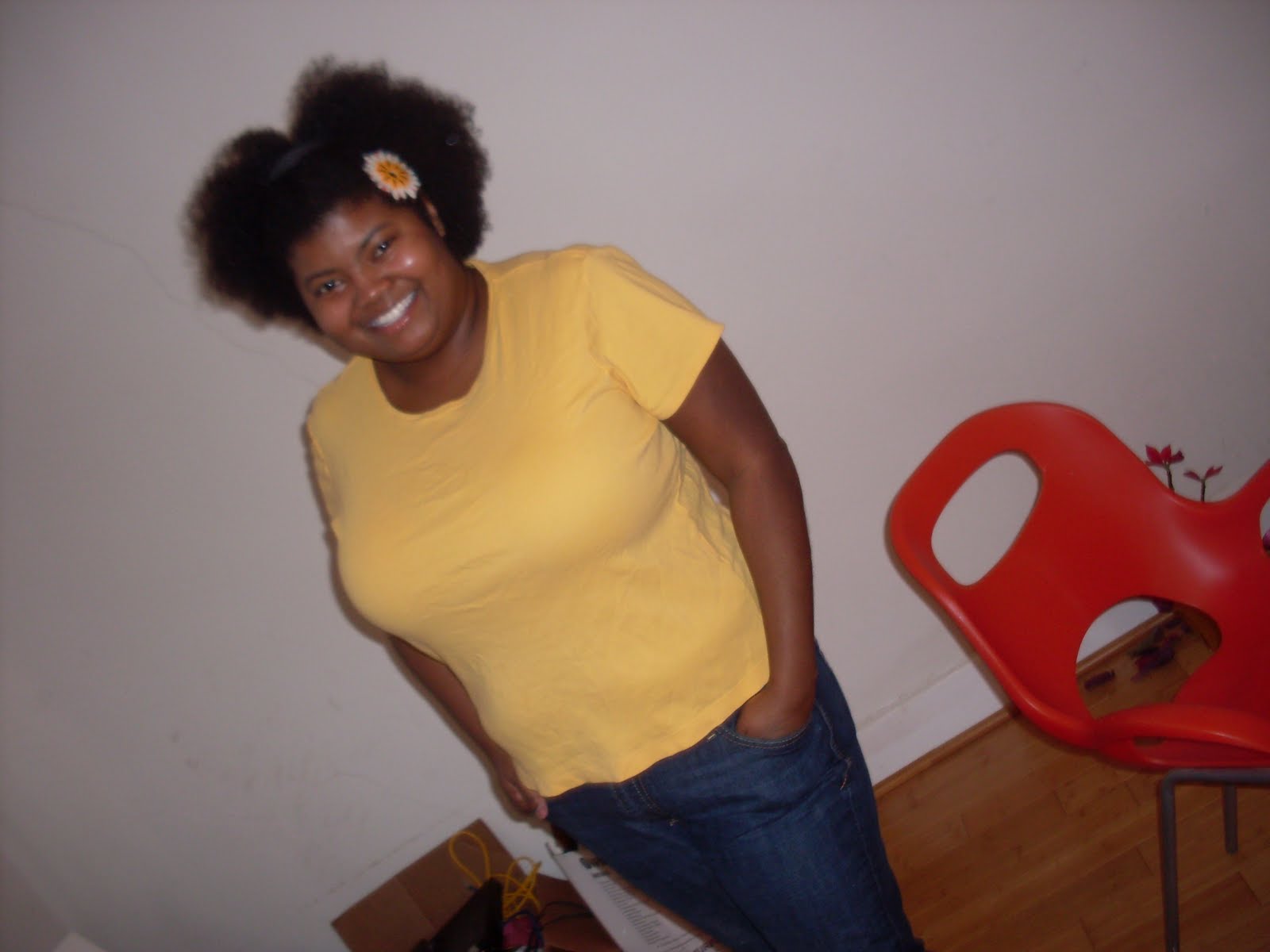
I’m no girly-girl. Some might describe me as a plane jane or even tom-boyish – mainly due to my preference for jeans or shorts, cotton tees, I love being outdoors, and getting dirty. Don’t get me wrong. I clean up nicely, very nicely for the right occasion.

I guess this could be my Nerd Girls get-up.
But I’m not rocking high-heels and short skirts and sporting eye make-up on the average day. That’s not me.
And in science, there is a mix of us – uber fems, plain janes, and tom boys. To be a fair feminist science scholar you recognize and embrace the whole continuum of feminine presence, not just the Barbie Doll version of it. That’s why I have a problem with this program; and I'm not the only one my Science Blogging BFF Oyster's Garter agrees.
Conceptually it is a great idea; however, please, don’t pass off this outreach effort for ALL girls/women. Why? Because off the wham I thought it was clear that “The not-so-popular girl, the cute but chubby girl, or even the smart but pimply faced girl - you know – the types of girls who most expect already do well in science and math and proud of their academic prowess” need not apply to be a Nerd Girl.
Tuesday, March 09, 2010
#LeeDefense Day 3/10/2010
An Investigation of Behavioral Syndromes and Individual Differences in Exploratory Behavior of Prairie Voles, Microtus ochrogaster
 photo credit: flynnroad.net
 photo credit: http://images.buycostumes.com/
Okay, it's not wordless. Has it ever been? I'm preparing for my big day and I keep running lists through my mind.
* The talk is ready.
* The tech was been worked out: I've made a successful Skype call to the out of town committee member. The video feed logistics seem to be working. Not only does it live feed, I can record it and folks can check it out later.
* My mom and family are in town and checked into the hotel. (There was some drama there, aaargh! But it all worked out.
Really the only thing I need to do now is get my hair done and pick out an outfit. And rest. Rest is definitely in order.
But I keep thinking I need "to study" for my defense tomorrow. After the public defense, the committee questions me privately about my research, why it matters, and whatever else they like. I keep thinking some one will ask me about quantum physics or neurobiology. Aaaarghh! Panic sets in.
The public defense begins promptly at 10 am CST.
The defense will be video streamed at: http://stickam.com/dnlee5
I'll start streaming around 9:30 to get things set up. Big THANKS to my labmate L. Kent and her husband T. Kent for all of their assistance with the technology.
You can follow me at http://twitter.com/Fetesociety. The video stream should allow twitter feed; however I will not be doing any twitter correspondence during my talk. (Sorry, not quite ready for that much social media accessibility). Please use the hashtag #LeeDefense when microblogging. I can answer questions you post here in the comments, and I'll get to them after the smoke clears.
If you plan to see the defense in person, I recommend arriving on campus no later than 9:30am. This place is a maze and parking is a beast. Link to Campus maps. The building is on North Campus. Link with additional info about the research and defense location.
Thank you all for your support and thank God for his Grace.
DNLee
Saturday, February 27, 2010
Diversity in Science Carnival #7: Black History Month - Broadening STEM Participation at every level
 Welcome to the 7th edition of Diversity in Science Carnival. This also marks the one year anniversary of the carnival. This carnival is all about the people, institutions and ideas that work to broaden participation of all people in the STEM field via education, research, public outreach, and good vibes in general. Broadening Participation of African-American audiences at every age, every level and over time is the theme that unites all of the posts submitted to this carnival. Thank you to all of the contributors.
Start them young!
A lesson well-learned by many who are dedicated to broadening STEM appreciation to African-American audiences is to reach them when they are young. One of my newest bestest blog friends is Rue Mapp of Outdoor Afro and she does just that. In A Day of Service: Celebrating the Legacy of Dr. King, she recaps time spent on a rainy MLK day doing ecological restoration with her young children .
She is definitely on the right track. Parents who provide positive STEM experiences really make important impressions on their children. As Roberta from Growing With Science Blog explains, in Meet a Scientist: Dale Emeagwali, Dr. Emeagwali decided to study science because her parents were such great informal educators and discovery mentors.
Today's Achievers in STEM
Ideonexus is becoming one of my favorite youth-centered computer science bloggers. He and his wife of TGAW essentially run a computer-science-after-school-club-internet-cafe for the kids in their Elizabeth City, NC neighborhood. He introduces his young charges, and us, to Dr. Clarence Ellis, the first African-American to earn an Ph.D. in comptuer science.

Dianne Glave writes about African-American participation in the environmental heritage movement. In Black Heritage Month, Buffalo Soldiers, and Shelton Johnson, she introduces us to Gloryland - a historical novel by NPS Park Ranger Shelton Johnson (you may have seen him on PBS Ken Burns National Parks) about Buffalo Soldiers and includes their participation in the founding of the National Parks System in the United States.
Under the Microscope collects stories from women involved with STEM with the goal of publishing a survival guide for young women in science. They submitted several posts for this edition of the carnival. First they provide a compiled a list of Notable black female scientists and innovators which includes Dr. Shirley Ann Jackson (Physicist), Ms. Valeri Thomas (Mathematician & Computer Scientist) and Dr. Patricia Bath (Opthalamlogical Surgeon).
Next they introduce us to Dr. Estella Atekwana, a biogeophysicist at Oklahoma State University in Geoscientist probes Earth for underground life and to Shaundra Daily, A Computer Engineer links computers, emotions and education. Both of these women do some incredibly interesting research. I'm personally glad for Under the Microscope for profiling so many scientists in the physical and mathematical sciences. I'm always eager to learn more and I'm a just as green about these subjects as some of the students I encounter in real life.
 And if you didn't know, let me let you tell you, the most significant contributor to medical science and microbiology was an African-American woman. She cured polio, developed in-vitro fertilization technology, went into outer-space, and helped unlock the mystery of the HIV virus; but she wasn't a scientist. Deborah Lacks' immortal mother, born Henrietta Lacks, scientific name is HeLa cells, is the woman responsible for these and many more scientific breakthroughs.
Building Bridges & Making Allies
It is also important to remember the importance of alliances when broadening participating in STEM to under-represented groups. Greg Laden never fails to disappoint to unearth key points any dig (pun intended). His post, Race and National Bias in East African Palaeoanthropology shines light on this historical under-representation of [Black] Africans as professionals in East African Paleoanthropology and how the Leakeys (yes, those Leakeys) played a pivotal role in helping to remedy the disparity.
And BikeMonkey takes us there...literally. He responds stiffly to Eric Michael Johnson's Open Letter to the Animal Liberation Front and their Supporters via Things White People Love: Comparing Black People to Monkeys. He rips EMJ for comparing the unethical medical experimental on Blacks (born of the cruelty of slavery and Jim Crow oppression) to research done on animals, in particular to non-human primates. Speaking up - against inappropriate behavior AND for inclusion of others - is exactly what is needed to create a more diverse community in science and engineering.
Related to that, Philip Alcabes discusses Science, Race, and Silence surrounding the tragic events at the Biology Department of the University of Alabama - Huntsville. Many may not have realized it, but that department was a very diverse science department. Three people were lost in the tragedy, including two African-American professors. This event choked me up, too. I share my thoughts about the incident in my post The Black History Month Post I never wanted to write.

photo credit: NYTimes.com
That concludes this edition. Submit your blog article to the next edition of diversity in science using our carnival submission form. It will be hosted by Wild About Ants and will celebrate
Women's History Month.
Tuesday, February 23, 2010
Open Lab is here. Buy yours today!

*trumpets blow and confetti bombs released*
Yours truly can now say I have official publishing cred and is one heckuva of science blogger, too. I'm just saying. The book, yes - a for real, printed on paper, trees had to die, ISBN stamped paperback book is available for you all to purchase.
Give the gift of science...literacy to one and all. And if you do, I am more than happy to sign your physical copy (if we meet in person).
Proceeds of the book (beyond the cost of publishing, of course) will be contributed to funds for future ScienceOnline Meetings - the science blogging conference I attend.
Buy a book, it's almost better than buying Girl Scout cookies....and you all know how much I love Girl Scouts and Girl Scout Cookies.
 There should be a patch for buying Open Laboratory 2009.

Tuesday, January 12, 2010
Setting My New Year's Resolutions
Happy New Year!
I know I have been posting less than regularly, but I assure that it is a good sign of my progress on my dissertation. The only thing that remains to be written is the Discussion section of my last chapter. All others have been written and handed in to my advisor to read. I feel very confident and excited about how my advisor will receive the last chapter. With each round of critiques from my lab mates and advisor on previous chapters, my remaining chapters are better written.
 My work space at the University library. I have my papers sprawled all over and act like it's my personal desk.
So now that a very important chapter of my life/career preparation is coming to a close, I need to think about my next steps. It seems timely that this is happening at the beginning of a new year. I’m already primed to make resolutions and lists of things I need to do.
1. Defend the dissertation. Get all of the appropriate signatures and approvals from the top to bottom and all of the right people on the North American continent, in town, and in the same room no later than February 2010.
2. Apply for various post-doc and teaching positions that seem absolutely perfect for me. Visit places and give a talk (my dissertation) if appropriate. Start immediately after the defense party, February 2010.
3. Clean up the dissertation for graduation school. This mostly mean I need to add a table of contents, an acknowledge section, and thoroughly verify the margins. Plus, they expect a whopping check from me to publish this fine piece of science literature to sit on the shelves of the university library. No later than March 2010
4. Prepare manuscripts for publications. Three, maybe four depending on if I should split ‘em or lump ‘em. Send them off and get them in an editor’s hand by graduation, May 2010.
5. Walk across the stage and party with my friends and family. May 2010.
6. Hopefully, I’ll have a real prospect lined up by June. I’m even willing to relocate and get started as June/July. But I know I’ve got to have something by August. The new semester starts and I’ve got to have myself planted in new soil by then.
I’ll keep you all posted on how things are progressing and feel free to drop some links if you know of some great opportunities in your area. I am willing to relocate.
Monday, December 21, 2009
Christmas Wish List
Happy Holidays,
Today is Winter Soltice, the shortest day of the year. Plus, Christmas is coming. I would normally get all excited heading home to see my family and seeing friends to celebrate New Year's Eve, but I've been pre-occupied. I am really cranking out the dissertation. That's why I've been a little quiet. My goal is the finish the whole thing by this Thursday, December 24th. Chapters one and two are done. These two chapters are the meatier of the manuscripts. Chapters three and four are lighter because I could not reject any of my hypotheses. That's not so bad, it happens sometimes. It just makes the discussion of the results short. There's not much to say, if not much happened. I need to write the Discussion for chapter 3. Chapter 4 is half done, just a little jumbled now. But I feel confident I can meet my deadline.
So my first Christmas wish is to be highly productive and proficient. I want to complete my manuscripts with no major over-hauls requested by my advisor or committee.
Everything else is just sweet bonus, but these T-shirts caught my eye.
AAAS was offering a free T-shirt with a year's subscription to Science Magazine. This one is about completing the dissertation. This is SO me right now. I have a subscription and I think it's good until next year (but now that I think about it, I'm not sure when it expires). So a gift subscription would be sweet, too.

This is another free T-shirt offered by AAAS with a subscription to Science Magazine. This one is about explaining your research at a party. I've actually done everything diagramed in the T-shirt except puppet show. Sweet idea! I think hand puppets of voles would actually make a pretty good props for my general public presentaions. I don't know if both shirts are beign offered, but I like both equally.

This next selection is just too sweet. Since I rock a big fro, I thought I this shirt might be perfect for me to wear - along with my picked out globe of hair at Science Online 2010. I came across it on Uncle Funky's Daughter Natural hair Salon & Boutique by way of Fly Girl Blog. By the way, their curly hair products looke divine, so while I'm wishing, I might as well go big. I'd love some Curly Magic - Curl Stimulator, as well as moisturizing cleanser and conditioning styling creme.

Finally, I'm always willing to accept the generic gift of kindness. If you feel so inclined, then please donate to your heart's content and wallet's capacity.
Happy Winter Soltice!
Tuesday, November 24, 2009
Origin of Species celebrates 150 years of publication
There is a grandeur in this view of life, with its
several powers having been originally breathed into
a few forms or into one: and that while this planet
has gone cycling on according to the fixed law of
gravity, from so simple a beginning endless forms
most beautiful and most wonderful have been and
are being evolved.
On this day in 1859, Charles Darwin most compelling (and the most important thesis in biological sciences) was published. The book sold out on the first day. The controversial, yet enlightening book about how life - vegetable, animal, and human - has come to be and exist in the state and form that it is in - has informed the academy, inspired creative experiments, and shocked the general public beyond belief. Then and now.
Evolution. Natural Selection. Sexual Selection. Variation. Change over time. Nature.

Throughout the year, the scientific community has been celebrating many science initiatives, but not the least of which is the 200th anniversary of Darwin's birth on February 12th and now the 150th anniversary of the publishing of Origin of Species.

Man, just like Kayne to interupt and not let Charles Darwin enjoy the celebration.
Related posts:
Understanding Evolution - summary of the concept at the University of California - Berkeley Evolution website
Charles Darwin was a Naturalist, Just Like You! - an intro to Charles Darwin & birthday post by me
Alfred Russel Wallace - wikipedia summary, to get an understanding of the Kanye joke.
Monday, November 23, 2009
Educate to Innovate: Promoting Science and Math Education
President Obama is scheduled to announce a campaign to enlist companies and nonprofit groups to spend money, time and volunteer effort to encourage students, especially in middle and high school, to pursue science, technology, engineering and math (STEM). The campaign - "Educate to Innovate" will primarily focus on informal education opportunities such as after-school activities, mentoring opportunities with scientists and researchers, plus quality science and math promotion television. So far, Elmo and Big Bird have signed up and the MacArthur Foundation is sweetening the pot to encourage video game designers to create educational gaming software. In addition to Sesame Street and many professional science societies signing on, big media outlets and stepping in also, donating money, equipment, and television time. Is it me or does this sound like President Obama tried to scoop the upcoming edition of Diversity in Science Carnival -
Broad Impacts II: Programs to promote STEM Diversity among K-12 students and general audiences?
Well, maybe not a scoop, but that sure is great timing. You all know how much I love theme-related carnivals. I'll take Obama's move as his official endorsement of the awesomeness of the science outreach and overall interest in participating in the upcoming DiS Carnival. When the official announcement comes out, I'll assume that White House is submitting that post to the upcoming carnival. I know they have their hands full so I'll submit it for them.
Read the entire news story published in the Science section of the New York Times. White House Plans Campaign to Promote Science and Math Education, November 22, 2009.
**********UPDATE****************UPDATE**************
President Obama Launches "Educate to Innovate" Campaign for Excellence in Science, Technology, Engineering & Math (Stem) Education
Nationwide effort includes over $260 million in public-private investments to move American students to the top of the packin science and math achievement over the next decade.
Nationwide effort includes over $260 million in public-private investments to move American students to the top of the packin science and math achievement over the next decade.

President Obama today launched the “Educate to Innovate” campaign, a nationwide effort to help reach the administration’s goal of moving American students from the middle to the top of the pack in science and math achievement over the next decade.
Speaking to key leaders of the STEM (Science, Technology, Engineering & Math) community and local students, President Obama announced a series of high-powered partnerships involving leading companies, foundations, non-profits, and science and engineering societies dedicated to motivating and inspiring young people across America to excel in science and math.
Among the initiatives announced by the President are:
- Five public-private partnerships that harness the power of media, interactive games, hands-on learning, and 100,000 volunteers to reach more than 10 million students over the next four years, inspiring them to be the next generation of makers, discoverers, and innovators. These partnerships represent a combined commitment of over $260 million in financial and in-kind support.
- An annual science fair at the White House, showcasing the student winners of national competitions in areas such as science, technology, and robotics.
President Obama has identified three overarching priorities for STEM education:
- increasing STEM literacy so all students can think critically in science, math, engineering and technology;
- improving the quality of math and science teaching so American students are no longer outperformed by those in other nations; and
- expanding STEM education and career opportunities for underrepresented groups, including women and minorities.
Okay Mr. President and Secretary Duncan, I take this as your official submission to the upcoming Diversity in Science Carnival.
Thursday, October 29, 2009
H1N1 Vaccination Hysteria Part 3: Alternative remedies vs. Vaccination
This is the third post in a series about the science and societal impacts of the flu and flu vaccination. Specifically, I emphasize the importance of sound scientific literacy in understanding this important topic. Please read the first posts in the series if you missed them.
Part 1: Is the Swine Flu Vaccine Safe?
Part 2: Should I get the shot?
In today’s post, I’ll address some of the responses commonly heard in response to the vaccination recommendations:
"I'll just take vitamins and natural herbs and I'll be protected from the Swine Flu."
Getting more Vitamin D
Particular to the Swine Flu, some people are recommending Vitamin D as a preventative to the disease. How does this work? Vitamin D is found in dairy and fish foods but our bodies are also able to manufacture Vitamin D if it sufficiently exposed to UV-B sun rays. Vitamin D is key for calcium and phosphorus uptake to keep your bones strong. Now there is some interesting research suggesting that Vitamin D might also be key in your immune response.
Vitamin D seems to be an important modulator in both your Primary and Secondary immune response. (See post 2 in the series where I define the immune response and immune cells) . A variant of the Vitamin D is apart of the molecular structure of some immune cells - like phages and B & T Memory cells. Without Vitamin D in the immune cells don't function to full capacity, have problem recognizing germs and don't attack and kill germs fast enough. The most compelling evidence shows that people who are deficient in Vitamin D are more likely to get sick from the flu, tuberculosis and suffer complications from Multiple sclerosis. This new research provides some very exciting news about how being adequately nourished is so important to maintaining good health.
What about eating organic foods?
Organic foods are delicious, and if you can afford to eat them then do. However, there is no evidence to suggest they are more or less healthy than traditionally raised and harvested foods. Eating fresher fruits, veggies, and whole grains is better for your general health than not eating fruits and veggies at all or eating processed foods. These foods provide vitamins and essential elements used by your immune cells to fight germs.
But I would like to make it clear, there is no evidence that Vitamin D or simply eating healthier foods alone are effective at preventative against any disease, including the Swine Flu. Simply, the results of the Vitamin D study and the benefits of eating organic foods reinforce the importance of a healthy, well-balanced diet. Eating well means getting all the nutrition you need to keep your body and your immune cells in tip-top shape.
Can't I just take care of myself in more natural/less invasive ways to avoid the Swine Flu?
The short answer is yes. Eating healthy, taking vitamins, getting some sunshine, exercise, a good night's sleep are perfect for keeping your body in its best condition to fight off any germ. Plus, nothing beats hand washing (but not with anti-bacterial soap) and sanitizing your home for killing germs and preventing exposure. And if you do get sick, then the routine regiment of rest, fluids, vitamins, seeing the doctor, and taking the prescribed medicine does the job. These are general precautions to any disease.
However, public health officials are adding an extra precaution this season because of the Swine Flu and here is why.
1. The Swine Flu is widespread and pervasive. It's only late October - still 2 months away from the peak flu season - and cases are a popping up everywhere. This is very odd, most seasonal flus don't show up so early and spread so quickly.

2. The Swine Flu doesn't pick on the usual suspects. This strange diseases is dealing its worst hand to teens and young adults. Typically, these are the healthiest people in the population and always the group people worry the least about when every pandemics come around. But the reports all indicate that these people are getting sick more. Most diseases pick on the weak -from an immune system perspective, this means the elderly, the very young, and people who are chronically sick - like cancer, diabetes, asthma, and heart disease . Their immune system is either slow or still too new to respond to serious germ, so swine flu could really do some harm to such people. 
That's why the doctors and public health officials recommend vaccination for the most at-risk groups: babies, toddlers, mommies (including pregnant women), the chronically ill, and young people (25 and younger). It seems the elderly have some immunity to swine flu due to previous exposure to the germ in the 1950s. But that still leaves a large number of people in the middle. If you are like me between the ages of 30-55, and in relative good health, you might not need the shot; and if you get the flu the odds are you will come through it just fine. However, you might want to get the vaccination to protect your family, especially if you spend time with anyone from one of the risk-prone groups listed above.
So, yes it is okay to wash your hands religiously, sanitize your home, school, and office space, cover your mouth and nose when coughing or sneezing, eat lots of fresh fruits and veggies, and take vitamins. But I still encourage you to seriously consider the Seasonal and Swine Flu vaccination for your family.
References:
Vitamin D, Wikipedia
Swine Flu Hospitalizing Mostly Young People In The US, Medical News Today October 2009
Organic food is no healthier, study finds, Reuters July 2009
AP Photo/The Post and Courier, Alan Hawes
CDC 2009 H1N1 Flu US Situation Update, October 23, 2009
Subscribe to:
Posts (Atom)