Showing posts with label urban sustainability. Show all posts

Tuesday, April 05, 2011

Urban Environmentalism in Action: St. Louis North City residents sue city over recycling

We’ve only got one planet and the resources we need are limited. April is such an optimistic time for environmentalist and conservationists. Thanks to some great social marketing and patience, most people are now on board to Save the Earth and use our natural resources more responsibly. For a long time, major metropolitan areas were hold-outs on these efforts – slow adoption of recycling, fear of limiting water for recreational purposes. And many people had concluded that some people didn’t care at all. But as KSDK Channel 5 of St. Louis recently reported, North city women to file lawsuit over recycling.

Ms. Annie Cooper and Ms. Maxine Johnson, residents of North St. Louis residents are filing a discrimination suit against the city claiming their alderman, Mr. Jeffrey Boyd of the 22nd Ward, refused to provide city-ordered recycling bins because the residents in their neighborhood are "too dumb to recycle." Mr. Boyd says he never said such things; but he does admit to not making recycling bins readily available to his neighbors because saw other measures as having higher priority. To be honest, I wouldn’t be surprised if his decision to overlook placing recycling bins in his neighborhood was based on an opinion held by many that African-Americans and people from inner-city communities are not likely to be environmental advocates and his residents probably wouldn’t use them anyway. It’s not uncommon for neighborhoods like his to recycle less frequently and in smaller volumes than more affluent parts of the city. In fact, I’ve done some anecdotal observations of how often community recycling bins, the ones by the fire stations, would get filled in different neighborhoods in St. Louis. Just as a comparison, there are no fewer than 4 bins in my old neighborhood, Benton Park, which always seemed to get full rather quickly. However, in Old North St. Louis, where I worked and very near Mr. Boyd’s ward, there were only 2 and they seemed to be empty most of the time.


Ms. Johnson and Ms. Cooper claim their neighborhood did not receive alley recycling bins like these.
(image courtesy of Threshold Properties blog)
 When it came time to use his share of the $100,000 of the city budget, Mr. Boyd allocated 60% of it to install cameras in alleys because dumping is a bigger problem than recycling by his judgment. I will agree that dumping is a problem in North St. Louis. I’ve driven by my fair share of empty lots and buildings with trash, furniture, and tires heaped high. However, I’m not impressed with his decision. Installing cameras doesn’t actually do anything about the problem; it simply catalogs the problem and it might lead to prosecution and fining of the offenders. That just seems like a long-roundabout way to resolving the problem, which is better trash removal and disposal in his neighborhood. How I see it, he could address both issues, getting people to recycle more and stem illegal dumping via education and outreach programs. And if it’s a matter of not knowing how to achieve this education and outreach, then look no further. I am a resident of the city (so no ‘know-it-all outsider effects); I have years of experience in environmental education and outreach to communities just like his community. I could help him

• engage his neighbors and help them understand why responsible trash removal is important to their health, well-being, property value, etc,
• raise awareness about the problem of filling up landfills, running out of natural resources, and illegal dumping,
• work with citizens to help them dispose of trash via ways that reduce environmental impact that are affordable, feasible and convenient,
• coordinate neighborhood cleanup efforts that give citizens a sense of pride and ownership in a clean, healthy community, and
• empower citizens to educate other residents in responsible trash removal and reporting illegal dumping activities.

Though it is often assumed that Black people and people from less-affluent neighbors aren’t interested in recycling and have more important things to worry about, that doesn’t seem to hold true for this neighborhood. Actually, I am quite energized by Ms. Cooper’s and Ms. Johnson’s actions; and I am proud of them, too! Far too often attention is placed on the lack of interest of people from urban, primarily minority, working-class neighborhoods to participate in environmental initiatives. This is a strong example of how people of color are as invested in environmental issues as well-to-do, mostly white citizens. It’s also a great example of citizens who have been traditionally marginalized, speaking up and demanding to be taken seriously on a very public issue. I think when citizens speak up, it behooves elected officials to listen and work with them. Especially in a situation that can be easily addressed like this one.

So, call me Alderman Boyd. I think I could help you out.

Thursday, April 22, 2010

Happy Earth Day 2010

Happy Earth Day!
Today marks the 40th annual celebration of the Earth.  Let's celebrate it and let's appreciate it.  We've only got one home (planet), let's take care of it.  Hope you get to enjoy the Earth Day activities in your area.  Get outdoors,pick up litter, recycle, bicylce, hike, walk, bird watch, and find something great to enjoy!

I'm headed to Murray State University (in Kentucky).  I've giving my first ever seminar talk.  College science departments often have weekly or monthly speakers come and talk about their research.  As a grad student, it's a regular thing to see and hear professors from all over the region or nation come and talk about the papers we may be reading.  Undergraduates sometimes attend.  But as a newly minted PhD this is a big deal to meal.  It's like a debutante ball!  I'll be giving a talk about my dissertation research - a reacap of my defense talk I gave a little more than a month ago.  Plus, I hope to make some great connections.

Yay, for science!

As usual, thanks for your well wishes and support.  Everything you contribute helps fund these little science adventures.  In this case, gas money to Murray, Kentucky.

Thanks,
DNLee
demystifying nature, letting everyone experience.

Thursday, September 10, 2009

Travelog Europe: Green Transportation

Throughout this month, I am highlighting my experiences in Europe and comparing and contrasting the wildlife and ecology of the Old World continent to my home continent of North America. However a recent radio story on NPR about urban cycling tapped me on the shoulder.
Is Biking Easier In New York? Ask The Bike Snob by Jo Ella Straley

I thought in line with my own and this blog's committment of Environmental Education and Awareness, and my theme of comparing and contrasting European and North American Urban Ecology, I am going to discuss Green Transportation.

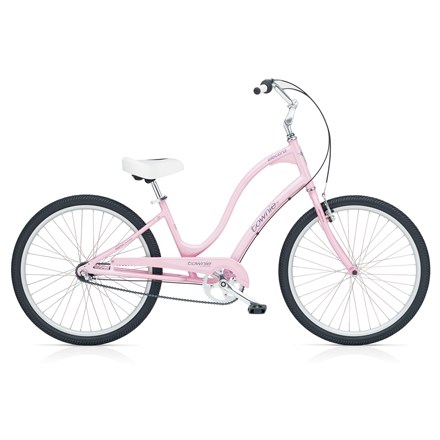
Though I own a bike (a pretty cool one at that), I will admit to being slow when it comes to using it as my primary source of transportation. Why? Laziness. I'm not in good enough of shape to bike to my destination in a decent amount of time and still be energized enough to get my business done. Capacity. Motorized vehicles have better capacity to help me take care of errands while I am out - shopping, picking up something, picking up someone, etc.


But while in Europe, and most notably in the Netherlands, bikes where EVERYWHERE. Thousands of bikes parked in lots at the train station, at bus stations, the plazas, shopping areas. Everywhere. Most of the street traffic was of bikes and some places had dedicated bike lanes - for each direction of traffic. Not only was I impressed with the infrastructure dedicated to cycle traffic - lots, bike rails, and roads - I was most impressed with how my two main biking concerns were non-issues for the Dutch.

1. Laziness. People still seemed to get to wherever they needed to be in a reasonable amount of time using bikes. Plus, most people were in good shape - not alot of heavy people there. Nor were they thin and sickly, just in shape...and no one seemed to complain. Biking, walking, and the train were just very common ways of getting about town and the region.

2. Capacity. Much like a carpool, groups of people biked together - keeping each other company, conversing and travelling. Plus, most bikes had a cargo bench on the back and/or baskets in the front. People carried parcels, packages, and books in them. I also observed quite a few people riding shot gun. It may look easy, but it ain't. That's some serious core muscles being used to maintain your balance...and many people were not holding on to the driver.
I mean young and old alike were just chilling on the cargo bench. Moreover, cycling did not prohibit families from traveling together. It was not at all uncommon to see parents with babies and toddlers strapped into special seats at the handle bars or right behind the parent, which is another feat of strength. Sometimes children rode their bikes along side parents and siblings. But my favorite was the cargo bike, complete with belts for securing young ones.
(See the photo slide show at the end of the post.)

The NPR story - listen to the audio or read the transcript - reports that commuter cycling is growing in popularity and use in New York City. That's good. As New York goes, so does the rest of the nation, and I'm very proud of my region and it's bicycling advocacy programs. (Trailnet, St. Louis Regional Bicycle Federation). However, the story does make it very clear there are some cultural attitudes of Americans that makes us very distinct from our European counterparts.

1. Cycling is still largely regarded as a recreational activity. The movement for cycle-friendly streets and highways will have to overcome this perception before we will truly adopt cycling as utilitarian. And it is. It is a practical form of transportation - cheap, even with all of the bells, whistles, and safety gear. Maintenance is minimal and more cost-effective than an auto and no vehicle insurance is needed.

2. Bike theft is real problem, but not taken seriously the authorities. Having one's bike and gear stolen is a major financial burden, particularly for working-class urbanites who could really benefit the most from bike transportation. In the Netherlands, bikes were everywhere. People still locked their bikes, but there was no overwhelming concerns about theft. In fact, I noticed many bikes just parked on sidewalks not secured to a bike rack or post. At first I thought these bikes were unsecured, but in actuality they were self-locked, with a device sort of like the Club. It locks on the back wheel and prevents the wheel from spinning. Neat.

3. People are concerned about getting sweaty or getting stinky when they ride to work. I co-sign this concern. However, while I was in Europe, this concern didn't cross my mind. The Dutch biked everywhere and I don't remember my nose being assaulted. So, I think that is good news.

Finally, I noted that the auomoblile culture of Europe was greener than ours, too. Motorbikes and scooters, as well as fuel-efficient sub-compacts were common. Plus, I noted this sign for electric car recharging station in Paris near the Arc de Triomphe.


Wednesday, April 22, 2009

Wordless Wednesday: Happy Earth Day!


Monday, November 17, 2008

Fellowships to Study Urban Ecology

Urban Ecology is a very new discipline within the fields of ecology and environmental sciences; and it means slightly different things to different people. Very broadly it is the study of plant and animal interactions with in an urban or human-built environment. But it also includes the study of how humans affect the natural landscape, how plants and animals survive human encroachment, and how we (humans) can create an urban world that is balanced and respects nature.

If you are college student (or know one) who is interested in Urban Ecology then you (or he/she) should seriously consider attending Arizona State University in Tempe and apply for a National Science Foundation Integrative Graduate Education and Research Training (IGERT) Fellowship.


The main objective of the Integrative Graduate Education and Research Training (IGERT) in Urban Ecology is to educate a new kind of life, earth, or social scientist who is broader, more flexible, more collaborative, and more adept at linking science and social issues.

Arizona State University's IGERT in Urban Ecology will be accepting applications for Fellowships and Associateships for students who can begin their studies fall 2009. The Fellowship applications are for 2 years and one summer of support for approved summer activities (Fall 2009/ Spring 2010, Summer 2010, and Fall 2010/ Spring 2011). Applicants may apply for one additional summer (2009) of support before they being their first academic year as an Urban IGERT fellow. This is the perfect amount of time to obtain a Master’s degree.

To be considered for this support, include in your Fellow application form a brief plan including who the supervisor will be. Recipients must be at ASU during the summer 2009 or working closely with an Urban IGERT faculty person. Visit the department website, School of Sustainability, the Nation’s first School of Sustainability to learn more about the faculty.

Deadline: Application review process begins February 1, 2009.

Residual questions regarding ASU's IGERT program should be directed to:
Gail Ryser, Program Coordinator IGERT in Urban Ecology
Global Institute of Sustainability
Arizona State University
Box 875402 Tempe AZ 85287-5402
P 480.965.6073 F 480.965.8087
website
http://sustainability.asu.edu/igert/
e-mail IGERT.Ecology@asu.edu

Good luck!

Thursday, September 18, 2008

Producing PRODUCE from Waste water - I told you so

Back in April there was alot stink raised about a science study that spread sewage on the lawns of Baltimore residents. That study, conducted by scientists from John Hopkins University, and funded by federal research grants, was designed to lower the lead levels in the soil in order to prevent lead poisoning in children.


Especially among members of the Black-blog-o-sphere, this was a big shock and there was outrage. But what surprised me more, was how unfamiliar most people were to the routine re-use of sewer water and sewer waste in commercial farming and landscape practices. This practice really disgusted people. I guess I really took this information for granted because I've known since I was child that manure made good fertilizer. Farmers and landscapers use animal manure all the time to get pasture, crops, and lawns to grow tall and beautiful.


I addressed this topic, a little, but I mainly focused on educating people on how common it is to re-use waste water and sewage. I'm scanning my feed aggregator and low! Look what was announced: A new report by an international research organization finds that urban farmers in developing countries overwhelmingly rely on waste water for irrigation.

A shot of a Mexican farmer washes his spring onion crop in a river containing sewage.

Fresh produce from wastewater is a summary or web release (written in real people language) produced by the Environmental, Science & Technology Journal.

In urban areas were people depend on food being produced and transported from elsewhere, the cost to eat can get prohibitive. Even here in the US, we're beginning to feel the pressure. So, urban farming is an ideal (cost-effective) way for people to feed themselves and make some extra money selling extras to others. Water is still an important and often limiting factor. And in poorer nations, mass amounts of "clean water" just isn't necessarily available. You use what you've got. Industriousness is the provider of many. You see, waste water is filled with nutrients. Plants can take in alot of those chemicals and use them to grow strong and tall. Plus, waste water is free. I mean, it hasn't been treated with chemicals to make it potable or worth drinking. So it doesn't cost anything to use it.

I hope this gives you another reason to remember to wash your fruits and veggies off before eating them

DNLee

Thursday, August 21, 2008

Links to other 'Urban Science' posts

I was Google Hiking (like Blog Safari a la Electronic Village) and came across some GREAT discoveries out there! Please visit the links and enjoy reading more about urban nature and other urban environmental issues.
Enjoy!


Nighttime Wildlife in Central Park New York - from NPR
More evidence that there is a host of interesting wildlife that call cities - even large a large metropolitan area - home. Also, parks are great examples of "refuges" for urban wildlife. Get to know your 'other' neighbors.


Science/Nature things to do with the kids in the Triangle, NC - from Blog Around the Clock
Hey, No Child Left Inside! I know in some places, school has started, but it still feels so good outside. So keep up the momentum and get those busy-bodies outside to play and learn. And trust me, you'll love it too. Lots of great ideas of things to do. But even if you don't live in the Raliegh-Durham area, these are some great starter ideas. And I love this picture of this little girl. She could SO be my little girl...She looks just like me, chubby cheeks and all. That was me at her age.

Trees for Grannies, a Thermoregulating Project by World of Warmth - from Treehugger
This is a neat project. First, it's about researchers who use thermo-imaging to study biological phenomena - everything from how a fever works to how your home's energy efficiency. And with that they found that areas near nursing homes and elder-care centers have some serious thermoregulation issues. So they are promoting eco-community service - Plant trees near nursing homes! It improves the landscape for the centers and provides affordable thermoregulation for these homes. This is a GREAT Service project idea for high school and college students.


California Set to Adopt Nation's First Anti-Sprawl Law - from Treehugger
This is an urban sustainability issues. Living in cities are great, but when cities grow too large, too fast it really stresses our resources - natural resources and municipal capacity.


No Bottled Water in London, Ontario - from Treehugger
What could be so wrong with bottled water? Remember my landfill posts? Well, this city is taking a stand against all of the unnecessary accumulation of these plastic bottles in their landfill. Plus, bottle water isn't always safer water. In this city, the water is clean and safe. Why buy what's already free and safe.

Until later,
DNLee

Thursday, June 05, 2008

Keep E-Waste Out of Landfills


Some things just don’t belong in a landfill, no matter what. Disposed electronics and batteries that operate them are classic examples – some people call it e-waste. These materials just don’t degrade – they are not BIOdegradable. I other words, they aren’t made of organic or once living materials. Electronics are made of plastics, glass, and wires made from heavy metails . Leaving them exposed to wind, sun and water won’t deteriorate them like wood, and batteries are the worse. They leak materials in the soil that literally poisons the earth. Electronic waste accounts for 70 percent of the overall toxic waste that you currently find in landfills. In addition to valuable metals like aluminum, electronics often contain hazardous materials like lead and mercury. The best thing to do is recycle the materials, but I know that’s not easy to do. Our “easy” lifestyles actually make it hard to do the right thing.

Don’t throw away
· Old TVs, radios
· Telephones, cellular phones, answering machines, fax machines
· Computers, computer screens, scanners
· Cameras, digital recorders, camcorders, tape recorders
· Compact fluorescent light bulbs
· Batteries – no matter what size from watch batteries to car batteries
· Paint
What to do instead
· Consider fixing it, upgrading it and keep using it
· Donate it
· Recycle it
· Drop it off at a proper facility, often a municipally managed program


Visit Earth911 and you can tell them where you live what you have to throw away and it will list nearby recycling facilities.
Call your city waste office and they can tell you proper ways to dispose of these items. Some cities have special drop-off centers and pick up days for “special trash”.
Visit the Environmental Protection Agency (EPA) to learn more about e-waste and how to properly dispose of it.

Happy World Environment Day!

Wednesday, May 28, 2008

Prolonging Landfill Life


Landfills only have a finite amount of space to hold trash and that means they can only last so long. One thing cities are trying to do is prolong the life of landfills.


Traditional landfills compact the trash to get more trash in a limited amount of space. The downside is that this reduces the oxygen in the ground which reduces the decomposition rate of the trash. This means it takes even longer for the trash to decompose. One answer to this problem is the Bioreactor Landfill. The bioreactor speeds up the decomposition rate so that the trash breaks down faster and makes room for more trash in the landfill.

But there are many efforts to keep things out of the landfill in the first place. And that starts with each of us.


#1: Precycling. Become more conscious of waste before we make it. Better than disposable, use re-usable supplies. For example, instead of paper towels and napkins use cloth napkins and towels. Use real dishes and utensils instead of paper plates and plastic cutlery. Basically, think how our grandparents may have done it, before there were disposable items readily available. Bring your own bags to the store.

#2: Recycling or Relifing. Put things back in the supply line, not the landfill. Most everything is recyclable now – plastic (#1-7), aluminum cans, food cans, food boxes, even glass. Or donate these items to an Education Recycling center. Items like 2 –liter bottles and potato chip canisters get a new life in arts & crafts and education projects. This is especially great for businesses that have lots of stuff they can’t use – like old letter head or file folders or containers. Don’t dump them, donate them.


#3: Composting. This is definitely Environmentalism 400. There’s no use putting organic waste in the landfill. Compost it in your kitchen, yard or garden and return those nutrients to the soil. Food scraps, leftovers, egg shells, fruit peelings, bones, fat and grease are all organic food waste. With the help of earthworms, they’ll help you get rid of all of that mess.

Alright, do what you can to help us sustain our urban communities now and for the the future.

Tuesday, May 27, 2008

Filling up Landfills

Days ago, I introduced you to Landfills – what they are and how they work. Landfills are essentially big holes in the ground that are filled with our daily trash. But think about it. Americans generate millions of tons of trash every year. Wouldn’t we just run out of space? Yes, that is a risk. That’s why reduce-reuse-recycling and composting are encouraged, especially in big cities. If we are thoughtless about our trash, where it goes – then we aren’t thinking about the big picture. How much land are we using up for garbage dumps, which mean we can’t use it for housing, recreation, business or farming.


Landfills only last so long. An aging landfill is one that is reaching its Full Capacity. Once the landfill is full, it is closed. Today many cities are filling up their landfills faster than they expected. This is a big problem. Where do you find the space and place to put a new landfill? Would you want to live near a garbage dump, filled daily with fresh decomposing trash? No, I doubt if anyone would. That’s why they are often set on the outskirts of towns, away from people. But we’ve got to get rid of this trash. It is a big complicated problem.


This means the city stops delivering trash and covers up the landfill often with a layer of concrete or asphalt (to cap off the landfill) and then with layers of dirt. But the city is still responsible for monitoring the landfill for leachate, methane gas and other types of pollution. This means that even when it is closed, the landfill fill can’t be use to build anything on it for many years to come. It just sits there until we are sure (as we can be) that is safe for people and animals.

Here are photos of a closed landfill. It looks like a simple span of ground. It is, but there are no residences nearby and the most that can be done with this land is natural habitat restoration -- planting grasses, plants, and flowers.

Tuesday, May 20, 2008

Make your own model Landfill

Yesterday, I introduced you to landfills and how they are made. As trash breaks down a dangerous byproduct is produced - leacheate. Landfills not only must take care of trash, but it also must not pose other health and environmental threats, too.

Here is how a typical landfill is constructed.


So, a landfill must not let the liquid contaminants seep into the ground water or soil. Therefore, all landfills must be lined with either plastic or clay to prevent leachate pollution.

But which landfill liner is better? Which will successfully prevent leachate pollution? Clay or plastic?

Here's an activity you could do at home or with your youth group.

Supply List:
  • transparent 2-liter soda bottles cut in half with cap
  • 1 bag each of sand, gravel, topsoil, clay dirt
  • plastic wrap
  • food coloring - red or blue or green
  • jug of water

Instructions:

  • tap 3 holes in the bottle cap.
  • replace the bottle cap on the bottle.
  • after cutting the bottle in half place the top half of the bottle, cap-side-down, inside of the bottom half of the bottle.
  • place your liner at the bottom. If plastic - lay it on the bottom and press flat. If clay, pack it down with your fingers.
  • randomly select any or all three of the soils - sand, gravel, topsoil and begin layering the soils. be sure to pack them with your fingers. Or use the materials recommended on the cards.
  • you can layer your soils as thick as you want and as few or many layers as you want.
  • when you're down constructing your land fill, add a few drops of food coloring to your jusg of water. The colored water represents leacheate.
  • pour the colored water into your landfill and watch how fast the water drains.


What happened? Did the leachate leak through?


Repeat the exercise and change your materials or do it with friends. What did others find? How do different landfills compare? Was using clay or a plastic liner the most effective way of preventing leachate pollution?

Monday, May 19, 2008

Throw it Away. Where is Away? Landfills.

What happens to you trash when you throw it away?”

Trash does not simply go away. Trash is taken to municipal landfills or dumps. Each day landfills receive trash, spread it out, and cover it with a layer of soil. Sometimes, the soil is mixed with sludge from sewers. However, the soil and trash layers are routinely compacted so as to use the space most effectively. Within the layers of soil trash is being decomposed. Compacting decreases the rate of decomposition of trash. Decomposition is the chemical breakdown of materials and requires air (oxygen) and water to hasten the process. Leachate and methane are two by-products of decomposition. Both are potentially hazardous and as a result landfills are regulated so as to reduce the negative impacts of these by-products. Leachate can potentially contaminate municipal water sources such as groundwater and aquifers, therefore all landfills must be lined with either plastic or clay to prevent leachate pollution.


Click on the image below to learn more about how landfills work.

Wednesday, May 14, 2008

Quick Tutorial in Urban Sewage Facilities

A great deal of our municipal taxes is dedicated to waste removal – garbage and sewage. And let’s be appreciative, it is one the most important technologies ever is municipal sewage facilities. Municipal sewage handling dates back to the Roman Empire. The Cloaca Maxima was a marvel. Using running water, the Romans were able to wash waste away from public baths and relief spots. Without technologies, societies use latrines or other set aside areas (read outhouse).

Thus sewer facilities are definitely an urban technology, and the most important technology benefiting human-kind. Urban areas, unlike rural or even traditional suburban areas, are densely populated – lots of people and buildings, all stacked up on each other. If we were still using a latrine system the situation would be bad – for us and the native wildlife with which we share this precious space. Thanks to waste handling technologies we have nipped diseases like cholera, typhoid, and dysentery in the bud. Societies with properly functioning waste water handling have virtually no incidences of these horrible diseases that claim countless lives each year. In fact, that’s what the cyclone victims in Burma must now contend with.

Thanks to How Stuff Works, you can read and see for yourself how Urban Wastewater Sewage Systems work.

Tuesday, May 13, 2008

Dealing with Waste & Sewage - the cost of "civilized" living

I'll dedicate the rest of the posts this month to how we deal with waste and how societies, particularly cities, deal with disposal and recycling of waste. Of special interest will be how we handle our own digestive waste and how digestive waste is also an important subtance to people and animals.

So an unofficial theme with month will be "May: it's all about the Poo and Garbage we think we leave behind".

Monday, May 12, 2008

What do we do with all of that Doo Doo?


There are many names for it – poop, manure, sludge, biosolids, compost, or humus, but all of it is the organic waste that’s left over. Especially important for the theme of my page is how do people live and interact with our environment and how do human societies (especially large cities) handle their waste and use our environment responsibly?
Municipalities handle waste water treatment. An important part is separating the solids from the liquids. But there are a lot of solids – called sludge after it has been separated and treated to kill any germs – and what happens with all of this poop? It can be disposed of on a landfill or applied to farm lands. Fertilizing farm lands is not much different than fertilizing gardens or lawns. In fact, the treated poopy water, called recycled water, is sometimes used to water lawns (an effort to save good clean drinking water for people).


The recent events about using sewer sludge in a science study have caused much attention, especially among activists. Based on the majority of reactions, I realize ‘re-using the stinky stuff’ seems to have most people turning up their noses (pun intended). It just seems to me that people are really surprised (and offended) by the ‘re-use’ of waste in this situation. But recycling poop isn’t new, especially to fertilize lawns. In fact, it is the one of the oldest methods of nutrient and energy recycling in nature and in human history.

Classic examples of ‘re-uses’ of poop include:

1. Fuel. Poop is an excellent source of fuel. Genghis Khan and the Western cowboys used ‘cow chips’ for fire fuel. There is no firewood on the grass plains. Cow chips however were abundant. After drying, the manure patty could be easily cut in pieces or slices and carried in pouches. The chips can burn for a long time and provide a more controlled fire. Even now, sludge from sewer treatment plants or manure from large farms and ranches is burned to create electricity and supplied to the power grid.
2. Fertilizer. Manure, from livestock mainly, has always been ‘added back’ to the soil. Humus rich soils are renowned for their ability to yield larger fruits and vegetables with little to no chemicals used. In fact, the whole go organic craze is built on composting and humus - which includes using all usable waste, even human. You can buy humus rich soil or humus products at garden and farm supply stores. Some Super Go Green advocates are even encouraging people to purchase and use composting toilets so that they can shorten the cycle and do it yourself.
3. Animal Bedding. This one was new to me. I was reading a children’s book about Dairy Farms and after the sludge has been treated the left over solids can also be made into animal bedding. Reference: Clarabelle Making Milk and So Much More.

At the very least, this should give us pause. I hope that the next time you flush you think about what happens down the pipe. Farewell to "Flush and Forget" .

Thursday, May 08, 2008

Precycling - Keeping Waste Outputs Low

Purchasing power is Power. A few weeks ago I was formally introduced to this concept of PRECYCLING by Ebony Mommy. In other words, thinking about our choices (food, shopping, travel, etc) before using them. Deciding what we will do and use so as NOT to create any waste, not even recyclable waste.

In today’s disposable-get-it-quick-and-easy-to-replace-for-cheap shopping environment a lot has been taken for granted. Our fore parents (who lived more rurally and closer to the land) were precyclers and recyclers. Nothing was wasted and everything was used. For one it was a matter of affordability. It was cheaper to keep something in working order and replace parts than get something new. Two it was a matter of convenience and sometimes safety. Accumulating trash near your living space was unhealthy and unsafe. But low, plastics and cheap electronics have been sent to make the world a better more enjoyable place. But with also went our great sense of conservation and frugality.

Now, we are faced with having to be more conservative. No where is this important than in our shopping decisions. And along with the option of paper or plastic grocery bags – or better yet, bring your own re-usable bag, now literature publishers are asking the same thing. Would you like that book in paper or plastic? And even for those of us who struggle to be environmentally conscious, it is hard to make the best decisions. My final word to you is to keep trying – keep being conservative, do everything you can to not waste anything – time, paper, water, energy, food – precycle if you can, and recycle everything you can.

Wednesday, May 07, 2008

Suburban Ecology as a Discipline of Study


The MRGP Center for Applied Suburban Ecology is a project of the Nature Conservancy in the State of New York.

Looks like the fields of Ecology and Conservation are really taking notice of the importance of studying human-ecology interactions in an entirely new way. Though I focus on Urban Ecology, in truth, it is hard to draw the line between urban and suburban areas. Human populations are growing spreading to much and so far that the line is fuzzy. I use the term city or urban areas very loosely, so urban and suburban areas and their ecologies overlap in my head. I'll also admit a lot of what I share can easily be found in suburban areas as well -- maybe you'll find more there, because presumably, there are alot more green spaces, parks, and yards in suburban areas as compared to dense cities. And no matter which side of the academic fence you come from, we all recognize that sustainability is the ultimate goal.
And the Mianus Gorge River Preserve have some suburban ecology internships and assistantships available for students in high school, undergraduate and graduate school.

Monday, April 28, 2008

Plant and nurture your trees

Trees often seem so stalwart and strong. But they do require some tending, too. Newly planted trees are especially important. Young trees are vulnerable to animal predation or nibbling from deer, rabbits, field mice and insects.


This is a young tree that is infected with a colony of tent catepillars. I got this picture just in time, because the neighbors that take care of the trees and plants on this street and the medium where this street grows were planning to kill these 'pests' in the coming days. These insects -though apart of the natural process and food web - will kill young trees.


So you might need to help out young trees at first, but it is worth it.


If you are planting trees on your property be sure it is the Right tree in the right place. Also make sure you check on the health of tree and take care of it. And if possible, definitely plant trees and shrubs that are native to your region. Planting native trees require less care because they are adapted to the environmental conditions – the heat, humidity, cold, amount of water, and insects. Non-native trees have to be watered and perhaps pruned to control their growth.

Related Posts with Thumbnails