Thursday, January 21, 2010

Guide to Urban Ecology

Today, was a great day. It all started last week when I posted my New Year's Resolutions which included speaking and presenting more with my pending graduation. Later that day I recieved an email from the St. Louis Academy of Science Speaker Series Director. She said she had seen my Science Matters interview on the local PBS station and asked if I would speak at an upcoming event for middle schoolers. The program is called Green Your Future - a discussion about eco-related jobs. I spoke to the students about urban ecology.

It was my very first time speaking to a general audience group on request. It was also the first time I gave my Urban Science Adventures! © schpeel to a live audience. The 7th graders from the St. Louis Public Schools were great. They were attentive and asked lots of questions. Great questions. And they offered several of their own Urban Science Adventures! © stories. Many of the kids had their own sightings of urban wildlife including opossums (both roadkill and alive), rabbits, squirrels, and hawks. One student even saw a porcupine once! I'm jealous. I'm a mammalogist and I've never seen a porcupine!

I presented a short presentation that included photos of urban wildlife scences I've captured right here in St. Louis. The kids were really fascinated by by my hands....not really. But I had 2 classrooms of all boys who were impressed that I was holding a frog, a bird and stood close enough to various types of bugs to photograph them. I capped things off by encouraging them to explore and discover nature in urban areas.

I think shooting local scenes was important. A couple of kids knew this spot exactly.

I love outreach. I really do. It was a blast. I'll be traveling this semester - searching for jobs, attending meetings, connecting with fellow bloggers (science/nature/blogging while brown) and outdoor enthusiasts. I've booked one date already to give a formal talk (the dissertation presentation talk). I'm willing to do travel and do some two-fer presentations - the official science talk and the science outreach presentation.

Also, check out my KETC Science Matters video and let me know what you think.

Thanks everyone for the support and encouragement.

DNLee
Demystifying nature, letting everyone experience

Wednesday, January 20, 2010

Wordless Wednesday: Chickory, the wild urban herb

Chickory is an edible plant. In fact, it has been used as a coffee substitute for decades. I think the flower is one of the most beautiful I've ever seen. Before moving to St. Louis, I can't recall ever seeing such a plant before down south. Chickory can grow anywhere. It is a hardy plant and very tolerant of poor soils. In fact, this patch of Chickory flowers were growing out of asphalt from an old parking lot of a closed down factory in North St. Louis.


Wednesday, January 13, 2010

I should have been a Girl Scout


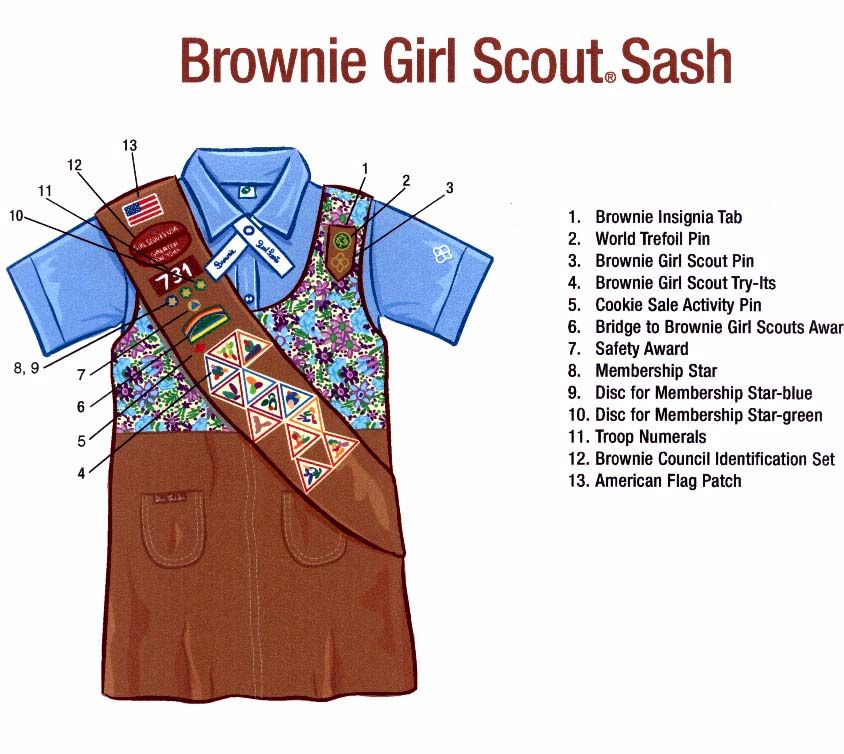
In kindergarten, I remember sitting in an assembly hall and learning about scouting. I left that assembly and couldn’t stop talking about wanting to be a Girl Scout. I wanted to wear that cute little outfit. I wanted that sash with all of the embroidered and earth tone patches. I saw myself cutely walking around school with my head tilted up, pig-tails flapping (with coordinated colored barrettes, of course), wearing that brown uniform. I wanted to go camping and cook stuff outside and grow something and learn first aid. I wanted the whole experience, outfit and all.

I attended a couple of introductory meetings in elementary school, but never had the chance to join a troop. However, I still learned lessons about citizenship, preparedness, safety, and even outdoor skills. Some I learned from my mother and her colleagues. (She was a Parks & Recreation worker who did youth and young adult activities, such as games, arts & crafts, swimming, hiking etc. in the summer and after-school). Other skills like orienteering, marksmanship, first aid, field dressing small game and making knots, I learned in ROTC in high school and college. (Yes, I was in ROTC and was this close to joining the Army). However, all these years later I still have this nagging longing to participate in the Scouts. Oh, I know I can join as an adult member and volunteer; but I really want to do the activities, learn the lessons, and earn the badges. I still want that snazzy sash!


Yet, on a more mature note, I really appreciate what scouting is all about and Girl Scouts in particular. Their mission and programs foster leadership, character, and independent thinking in girls and young women. Their traditional programs in nature and outdoor education appeal to me as both a nature lover and environmental educator. Plus, they also promote math, science, and technology education and career pursuits in young women from all walks of life. Girl Scouts has a strong and long history of both community service and community outreach. These are all values that I share and support in real life, in my career, and on this blog.

I don’t know of any obvious job opportunities with the Girl Scouts, but I do know that I could definitely see myself working with/for this organization. Specifically, my expertise in science/urban ecology could be a resource to enhance the already awesome leadership programs and contribute to the STEM (science, technology, engineering, & math) science careers, and environmental awareness guides and activities. I have found that informal experiences can really provide the perfect setting for hesitant students to grow academically and personally. Students from diverse and under-represented groups may not have the amply support and opportunities to cultivate their interest in science. Outdoor experiences and community service experiences are perfect ways to foster science interest. Compared to science outreach programs for elementary and middle school age children, there are fewer programs specifically for teens. This is regrettable because such programs are woefully needed to fill in the very large curriculum gap from high school to college education. Finally, I have a strong background in mentoring and outreach to teens and urban audiences. I could be a mentor and a resource to young women (and their families) who may want to further explore their interests in science. Today, it is easier than ever to reach out to all girls all over the world. With live interactive workshops as well as interactive media such as blogs, video interviews, and live chats, Girls Scouts from every region could call on Dr. DNLee to help her shape her future.

This is all so exciting for me to ponder because Girl Scouts have the existing programs, infrastructure and community resources to support my personal career goals related to outreach.

Now, all I have to do is find out who I need to pitch this idea to…Any ideas or recommendations?

Tuesday, January 12, 2010

Setting My New Year's Resolutions

Happy New Year!

I know I have been posting less than regularly, but I assure that it is a good sign of my progress on my dissertation. The only thing that remains to be written is the Discussion section of my last chapter. All others have been written and handed in to my advisor to read. I feel very confident and excited about how my advisor will receive the last chapter. With each round of critiques from my lab mates and advisor on previous chapters, my remaining chapters are better written.

My work space at the University library. I have my papers sprawled all over and act like it's my personal desk.

So now that a very important chapter of my life/career preparation is coming to a close, I need to think about my next steps. It seems timely that this is happening at the beginning of a new year. I’m already primed to make resolutions and lists of things I need to do.

1. Defend the dissertation. Get all of the appropriate signatures and approvals from the top to bottom and all of the right people on the North American continent, in town, and in the same room no later than February 2010.

2. Apply for various post-doc and teaching positions that seem absolutely perfect for me. Visit places and give a talk (my dissertation) if appropriate. Start immediately after the defense party, February 2010.

3. Clean up the dissertation for graduation school. This mostly mean I need to add a table of contents, an acknowledge section, and thoroughly verify the margins. Plus, they expect a whopping check from me to publish this fine piece of science literature to sit on the shelves of the university library. No later than March 2010

4. Prepare manuscripts for publications. Three, maybe four depending on if I should split ‘em or lump ‘em. Send them off and get them in an editor’s hand by graduation, May 2010.
5. Walk across the stage and party with my friends and family. May 2010.

6. Hopefully, I’ll have a real prospect lined up by June. I’m even willing to relocate and get started as June/July. But I know I’ve got to have something by August. The new semester starts and I’ve got to have myself planted in new soil by then.

I’ll keep you all posted on how things are progressing and feel free to drop some links if you know of some great opportunities in your area. I am willing to relocate.

Sunday, December 27, 2009

Planting seeds of science interests in kids of all ages

Let’s say you’re the parent/mentor/teacher/tutor/friend of a kid super-excited about some aspect of science, technology, engineering or math (STEM). You want to nurture that interest and keep that child engaged, especially during the dull times of school breaks, after-school and perhaps even for school-related projects. Whether you’re an educator or not, sometimes an adult needs reinforcements to help a child or teen find his/her own interest path.

Fostering science, math, and engineering interests in young people is the goal of several organizations, including many of our nation’s publicly funded agencies like NASA and NSF. Informal science education programs and institutions run the range. Some supplement traditional K-12 education lessons. Some provide opportunities for families to spend time together, learning, exploring, and having fun. And still there are some that specifically target under-served audiences to introduce them to pioneers and exciting career opportunities.

STEM Outreach Programs that rock!

2009 was definitely the year science initiatives! It was hailed as
* The Year of Science – with each month focusing on a different science topic;
* The Year of the Gorilla – to raise awareness of the threat of extinction to this beautiful primate;
* The Year of Darwin – to celebrate the 200th year of Charles Darwin’s birth and 150th anniversary of the publication of his book; and
* The Year of Astronomy – to celebrate one of the oldest fields of science

To help spread the word of these science initiatives, Science Cafes really took off, especially here in the United States. Often hosted at fun meeting places like restaurants where pizza and beverages are served, people can meet local scientists and learn about interesting topics. Since local communities organize these events, the topics might be related to science initiatives or any other hot topic in the news like sports, herbal medicine, love or health.

But my absolute favorite science outreach efforts are the hands-on organically-grown science and nature outreach programs in individual communities. Here in St. Louis, Missouri, I’ve been involved in a few. My most recent experience was this past summer in the Forest Park Summer Youth Program with Boys & Girls Club kids.

Ocean Discovery Institute of San Diego, California, (formerly Aquatic Adventures) is an awesome program! Diverse young people from this very urban community are engaged in science exploration marine research, and environmental conservation education. This happens to be one of my dream jobs.

Plus, the 2010 San Diego Science Festival sounds like it will be the most anticipated science showcase of greater San Diego. Offering a wide variety of programs and events inspire all ages, “with a special focus on building a pipeline of future scientists and STEM thought-leaders” – festivities include supplemental K-12 Programs, Scientist Speakers series at local schools, a science Exposition, and Scientists in Residence Program. College student scientists represented from disciplines such as Biomedicine, Pharmacology, Engineering, Green Technology, Oceanography, and Astrophysics will work in partnership with San Diego county schools for 6 weeks and create joint project that will be showcased in the 2010 Festival.

Science Chicago hosted the world’s largest science celebration. Being the home of several private businesses like Alberto Culver and institutions like the Shedd Aquarium, all of Chicago had a chance to get a closer look into how science impacts our lives and our health.

I recently discovered ME4E – Multidisciplinary Education for the Environment – also out of the Chicago, Illinois. This organization provides outdoor hands-on activities for schools, scouts, and public groups to learn more about ecology and local wildlife. They seem to have a full calendar of events such as bird counts, wildlife watching, making cast of animal tracks, wetlands and woodlands lesson plans, and urban gardening programs.

The Harris Foundation Summer Science Camp is a free, academic program offered in over 20 different cities in the United Sates. Middle school students participate in a variety of recreational, social, and STEM educational activities at local college campuses. Founded by Dr. Bernard Harris, it is designed to support historically underserved and underrepresented students with limited opportunities.
Finally, no matter where you live, here is a program for any student in 3rd- 6th grade. Pulse of the Planet Kid’s Science Challenge is a nationwide competition for kids to submit experiments and problems for REAL scientists and engineers to solve. The website is also a fun place to play science games, watch videos, and enter to win awesome prizes and trips! Plus, the site also offers educator resources for teachers and parents, such as pod casts and downloadable curricula.

Monday, December 21, 2009

Christmas Wish List

Happy Holidays,

Today is Winter Soltice, the shortest day of the year. Plus, Christmas is coming. I would normally get all excited heading home to see my family and seeing friends to celebrate New Year's Eve, but I've been pre-occupied. I am really cranking out the dissertation. That's why I've been a little quiet. My goal is the finish the whole thing by this Thursday, December 24th. Chapters one and two are done. These two chapters are the meatier of the manuscripts. Chapters three and four are lighter because I could not reject any of my hypotheses. That's not so bad, it happens sometimes. It just makes the discussion of the results short. There's not much to say, if not much happened. I need to write the Discussion for chapter 3. Chapter 4 is half done, just a little jumbled now. But I feel confident I can meet my deadline.

So my first Christmas wish is to be highly productive and proficient. I want to complete my manuscripts with no major over-hauls requested by my advisor or committee.

Everything else is just sweet bonus, but these T-shirts caught my eye.

AAAS was offering a free T-shirt with a year's subscription to Science Magazine. This one is about completing the dissertation. This is SO me right now. I have a subscription and I think it's good until next year (but now that I think about it, I'm not sure when it expires). So a gift subscription would be sweet, too.

This is another free T-shirt offered by AAAS with a subscription to Science Magazine. This one is about explaining your research at a party. I've actually done everything diagramed in the T-shirt except puppet show. Sweet idea! I think hand puppets of voles would actually make a pretty good props for my general public presentaions. I don't know if both shirts are beign offered, but I like both equally.

This next selection is just too sweet. Since I rock a big fro, I thought I this shirt might be perfect for me to wear - along with my picked out globe of hair at Science Online 2010. I came across it on Uncle Funky's Daughter Natural hair Salon & Boutique by way of Fly Girl Blog. By the way, their curly hair products looke divine, so while I'm wishing, I might as well go big. I'd love some Curly Magic - Curl Stimulator, as well as moisturizing cleanser and conditioning styling creme.

Finally, I'm always willing to accept the generic gift of kindness. If you feel so inclined, then please donate to your heart's content and wallet's capacity.


Happy Winter Soltice!

Tuesday, December 08, 2009

Stimulate your Brain: STEM Scholarships & Internships

Middle school and High School are the preparation grounds for your future. But what happens after you receive your diploma? Graduating from high school signals the end of your childhood and the beginning of your adult life. This means the start of your journey to independence, bills and responsibilities. Most adults don’t expect you to leave home and be self-sufficient immediately; but you do need to be ready to accept the challenge. It’s never too early to prepare for post-graduation (or too late).

A post-high school education is your best plan for securing a stable future for yourself (Vo-Tech, Community college or university). For those of you interested in a career in Science, Technology, Engineering, or Math (STEM), a college education will be order. However, funding a college education is no simple matter. Getting accepted in the school of your dreams is not the end of the story. Financing your education takes planning – the sooner the better. When parents ask me about how to fund their children’s college education I tell them to start right now, even as early as middle school. The Federal Financial Aid form (FAFSA) is a perfect place to t start, but with the cost of education rising faster than inflation and the cost of living, Pell Grants and Students Loans will not be enough. Apply for competitive scholarships throughout middle and high school. If you’re in college, apply for additional scholarships as well as internship and mentoring programs.

Here are some announcements:

1. The Society of Wetland Scientists Diversity Program Undergraduate Mentoring Awards
This professional science society offers full travel awards to undergraduate students to attend its annual meeting. The 2010 meeting will be held June 27 – July 2, 2010 meeting in Salt Lake City, Utah.
Thanks to generous funding by the NSF, undergraduate students from underrepresented groups can receive wetland sciences career mentoring for at the annual meeting. Students must complete an application. In order to maximize the opportunity for interested students to apply, the deadline has been extended to January 30. Visit the website for details and the application.

Students from the 2009 SWS Conference. (This could be you!)

2. The 2010 Google Anita Borg Memorial Scholarship
Dr. Anita Borg (1949-2003) devoted her life to revolutionizing the way we think about technology and dismantling the barriers that keep women and minorities from entering the computing and technology fields.
Google is proud to announce the 2010 Google Anita Borg Memorial Scholarship, awarding a group of female students each a scholarship for the 2010-2011academic year. All finalists and scholarship recipients will also be invited to attend a 3-day Scholars' Retreat at the Googleplex in 2010. The Google Anita Borg Scholarship program is available to undergraduate or graduate female students studying computer science (or closely related field) at a university in Africa, Australia, Canada, Europe, the Middle East, New Zealand and the United States. The candidate must have a cumulative GPA of at least 3.5 on a 4.0 scale or 4.5 on a 5.0 scale or equivalent. Deadline to apply is February 1, 2010. For complete details for this and more scholarships for diverse students, please visit Google Scholarships
h/t Blacks Gone Geek

Additional Scholarships and Fellowships in various disciplines can be found at these sites.
a. The Multicultural Advantage - lists of scholarships and fellowships with upcoming deadlines.
b. Planning and Preparing for College – updates of Scholarships, Internships, and the college application process.

Saturday, December 05, 2009

Family visit to the Racine Zoo

Over Thanksgiving break I took my niece and younger cousin to the Racine Zoo. Zoos (and Botanical Gardens, too) are perfect places to introduce young people to ecology - animals, plants and how they interact and depend on each other to make the world go around. Little does she know, I'm preparing her for a lifetime of outdoor and science adventures. I've taken her to another zoo, so she was anticipating this visit. Like all children, she was excited to see the big animals and hear the big cats roar. I was also excited to take my younger cousin who definitely is a field biologist. The trip to the zoo was a mini-class about zoology. He was asked me so many questions about animals, it seemed as if he was hitting me with every curiosity he ever had and I was the first person he was able to an answer from.


I delayed getting on the road to return home. My brother teased about how I do anything for the "kids interested in school and stuff". He's right. I am a sucker for the babies. I was letting him know that even in big cities (he lives in Chicago) that wild animals like deer, raptors, rabbits, and coyotes live in suburban and urban areas. Before I departed, he had my dad's binoculars and out in the backyard siting wildlife in the field behind the house.


Tuesday, November 24, 2009

Origin of Species celebrates 150 years of publication

There is a grandeur in this view of life, with its
several powers having been originally breathed into
a few forms or into one: and that while this planet
has gone cycling on according to the fixed law of
gravity, from so simple a beginning endless forms
most beautiful and most wonderful have been and
are being evolved.

— Charles Darwin in the The Origin of Species

On this day in 1859, Charles Darwin most compelling (and the most important thesis in biological sciences) was published. The book sold out on the first day. The controversial, yet enlightening book about how life - vegetable, animal, and human - has come to be and exist in the state and form that it is in - has informed the academy, inspired creative experiments, and shocked the general public beyond belief. Then and now.

Evolution. Natural Selection. Sexual Selection. Variation. Change over time. Nature.


Throughout the year, the scientific community has been celebrating many science initiatives, but not the least of which is the 200th anniversary of Darwin's birth on February 12th and now the 150th anniversary of the publishing of Origin of Species.

Man, just like Kayne to interupt and not let Charles Darwin enjoy the celebration.

Related posts:
Understanding Evolution - summary of the concept at the University of California - Berkeley Evolution website
Charles Darwin was a Naturalist, Just Like You! - an intro to Charles Darwin & birthday post by me
Alfred Russel Wallace - wikipedia summary, to get an understanding of the Kanye joke.
Lives of the Saints of Science: Darwin - by Thus Spake Zuska who offers a critique of Darwin the man

Monday, November 23, 2009

Educate to Innovate: Promoting Science and Math Education

President Obama is scheduled to announce a campaign to enlist companies and nonprofit groups to spend money, time and volunteer effort to encourage students, especially in middle and high school, to pursue science, technology, engineering and math (STEM). The campaign - "Educate to Innovate" will primarily focus on informal education opportunities such as after-school activities, mentoring opportunities with scientists and researchers, plus quality science and math promotion television. So far, Elmo and Big Bird have signed up and the MacArthur Foundation is sweetening the pot to encourage video game designers to create educational gaming software. In addition to Sesame Street and many professional science societies signing on, big media outlets and stepping in also, donating money, equipment, and television time.

Is it me or does this sound like President Obama tried to scoop the upcoming edition of Diversity in Science Carnival -
Broad Impacts II: Programs to promote STEM Diversity among K-12 students and general audiences?

Well, maybe not a scoop, but that sure is great timing. You all know how much I love theme-related carnivals. I'll take Obama's move as his official endorsement of the awesomeness of the science outreach and overall interest in participating in the upcoming DiS Carnival. When the official announcement comes out, I'll assume that White House is submitting that post to the upcoming carnival. I know they have their hands full so I'll submit it for them.

Read the entire news story published in the Science section of the New York Times. White House Plans Campaign to Promote Science and Math Education, November 22, 2009.


**********UPDATE****************UPDATE**************

President Obama Launches "Educate to Innovate" Campaign for Excellence in Science, Technology, Engineering & Math (Stem) Education
Nationwide effort includes over $260 million in public-private investments to move American students to the top of the packin science and math achievement over the next decade.


From the White House Office of the Press Secretary, Official Press Release:

President Obama today launched the “Educate to Innovate” campaign, a nationwide effort to help reach the administration’s goal of moving American students from the middle to the top of the pack in science and math achievement over the next decade.

Speaking to key leaders of the STEM (Science, Technology, Engineering & Math) community and local students, President Obama announced a series of high-powered partnerships involving leading companies, foundations, non-profits, and science and engineering societies dedicated to motivating and inspiring young people across America to excel in science and math.

Among the initiatives announced by the President are:
  • Five public-private partnerships that harness the power of media, interactive games, hands-on learning, and 100,000 volunteers to reach more than 10 million students over the next four years, inspiring them to be the next generation of makers, discoverers, and innovators. These partnerships represent a combined commitment of over $260 million in financial and in-kind support.

  • An annual science fair at the White House, showcasing the student winners of national competitions in areas such as science, technology, and robotics.

President Obama has identified three overarching priorities for STEM education:

  1. increasing STEM literacy so all students can think critically in science, math, engineering and technology;

  2. improving the quality of math and science teaching so American students are no longer outperformed by those in other nations; and

  3. expanding STEM education and career opportunities for underrepresented groups, including women and minorities.

Okay Mr. President and Secretary Duncan, I take this as your official submission to the upcoming Diversity in Science Carnival.

Friday, November 20, 2009

Diversity in Science Carnival #4 – Increasing Diversity among the college ranks

Exactly one year ago, I laid the roots to the Diversity in Science Carnival, but I did not know it. As I was beginning to assemble this edition, I found myself typing words, phrases and sentiments that were all too familiar.
Something about the state and statistics of under-represented minorities in STEM - “The very large racial Ph.D. gap in the natural sciences is striking when we examine black Ph.D. awards in specific disciplines”.

I soon remembered that I had written about this topic; and this is where this edition of DiS Carnival: Examining STEM Diversity and Broad Impacts at the College Level and beyond – will begin: Increasing Diversity in the Sciences.


Did you know that Hispanics/Latinos currently comprise just over 5% of the professional STEM workforce, although their proportion of US residents is around 12%? In Si se puede - Hispanics and STEM, Liz of STEM-ology frames the topic as multi-national issue. Both the United States and Mexico need to address this matter in order to increase the number of Latinos in the STEM pipeline – on both sides of the border.

What can be done to attract more women in science? Well, let’s ask the 4 women who earned the most prestigious award in science – the Nobel Prize. In Advice from Four Nobel Prize Winners, Roberta of Growing with Science Blog summarizes their recommendations published in Science Magazine via the Association for Women in Science (AWIS). AWIS, by the way, is a champion of STEM diversity and outreach to all, particularly for women and girls.


(l) Carol W. Greider -Nobel Prize in Physiology or Medicine 2009
(r) Elizabeth H. Blackburn - Nobel Prize in Physiology
Photos care of Gerbil, Licensed by Attribution Share Alike 3.0


Related to that, the Smithsonian’s Blog – Surprising Science - shares with us that Girls CAN do Math (Duh). Despite the long tradition of girls shying away from math and science, there is no biological evidence that girls are incapable of performing well in these subjects.


Mentorship and praise matter – to all people. Some organizations promote diversity by highlighting the achievements of individuals (and organizations) that share science with broader audiences. In particular the American Institute of Biological Sciences recognizes diversity in the biological sciences with awards to individuals and institutions who promote diversity, written by yours truly.

Raising the profile of minority scientists or institutions that support them is one of the goals of a panel I and Anne Jefferson of Highly Allochthonous will lead at ScienceOnline 2010. “In the United States, we have a diversity problem in the geosciences. Less than 5% of BS degrees in geosciences go to minorities, contrasting with ~15% in science and engineering as a whole.” In Casting a Wider Net: Opportunities for Enhancing Diversity in the Geosciences, she introduces us to the NSF –OEDG program (Opportunities for Enhancing Diversity in the Geosciences).

Speaking of the NSF, the National Science Foundation is perhaps the most important benefactor for science diversity. They provide the financial means for scientists and engineers to do research and teach. In Increasing STEM Diversity with Funding Opportunities, I share a host of funding resources that specifically geared to students from underrepresented groups.


However, Kim Hannula of All of My Faults are Stress Related gets to the heart of the matter - What experiences bring minority students into the geosciences - and what ones drive them away? We can spout numbers, send students to meetings, and dole out big bucks; but the truth is we’ve got to figure out what is it about STEM that attracts or sours some people. Until we’re brave enough to have these conversations, our collective efforts to diversify STEM fields will be less effective.
*********************

Join us next month as we further explore this topic of STEM Diversity and Broad Impacts II: Pre-college and Programs for general audiences. Please prepare and submit your posts about successful, ambitious and inspiring diversity programs for youth and general audiences such as after-school programs, summer institutes, and citizen science programs sponsored by museums and universities.
Submission Deadline: December 21st. Submit here.
Carnival Post date: December 27th
Hosted by:
STEM-ology

Tuesday, November 17, 2009

Increasing STEM Diversity with Funding Opportunities

The best way for an institution to promote diversity among the scholars involved in STEM is to put their money where their mouths are. Funding outreach programs, research and educational opportunities, scholarships, and travel to conference is the most effective way to attract and retain a diverse body to STEM. I have been personally fortunate, nay, blessed to have had an ample amount of funding for my graduate education and dissertation research.

In this post I will share the funding resources I am familiar with that are designed to increase access to STEM to students from underrepresented groups.

The National Science Foundation funds the Alliances for Graduate Education and the Professoriate (AGEP) program. AGEP is a network of universities dedicated to increasing the number of underrepresented minorities obtaining graduate degrees in science, technology, engineering and mathematics by proving multi-year fellowships along with ample funds for research and attending conferences. Much of my doctorate education has been funded by NSF-AGEP.

Ford Foundation Fellowship Program seeks to increase the diversity of the nation’s college and university faculties by increasing their ethnic and racial diversity, to maximize the educational benefits of diversity, and to increase the number of professors who can and will use diversity as a resource for enriching the education of all students. They offer pre-doctoral, dissertation, and post-doctoral fellowships to support scholars with tuition, research funding, and stipend/salary.

The Southern Regional Education Board (SREB) offers fellowships to minorities seeing PhDs in STEM who later intend to become college professors. SREB offers two awards, a pre-doctoral award and a dissertation year award to cover tuition, research funding and a stipend.

The UNCF•Merck Science Initiative awards scholarships and fellowships to African-American students in science and biomedical research. This program provides tuition, research funding, and stipend/salary to its scholars.

State of Missouri Department of Natural Resources – Environmental Education Scholarship Program for students from underrepresented groups pursuing a bachelor’s or master’s degree in an environmental course of study. Applications are due June 1 of each year.

NSF Minority Postdoctoral Research Fellowship – though the National Science Foundation is re-organizing its divisions and awards, there are still providing research grants to postdoctoral candidates. These fellowships support training and research in science, technology, engineering and mathematics

Attending scientific conferences also offer opportunities to recruit promising students to STEM fields. Now, many professional societies offer scholarships to attend these meetings and offer great mentoring and networking opportunities to students.

The Compact for Faculty Diversity is a coalition of organizations such as SREB, NSF-AGEP, and others; each year they host the Institute on Teaching and Mentoring. This four-day conference has become the largest gathering of minority doctoral scholars in the country and provides scholars with the skills necessary to succeed in graduate study and to prepare them for success as faculty members at colleges and universities.

The Animal Behavior Society, my professional society, has long been a champion of diversity at the undergraduate, graduate, and faculty levels. The society offers three types of awards for students to attend its annual international meeting.
1. Charles H. Turner Program covers registration, travel and lodging and hosts a special mentoring workshops for undergraduate participation at the annual Society meetings
2. The Diversity Grant covers registration fees for graduate students attending the annual ABS Meeting, with the goal of broadening the minority and ethnic representation
3. Latin American Travel Awards are intended to encourage greater participation of Latin American researchers in ABS meetings, by helping to defray the costs of international travel, housing and/or meals at meetings.

The Society of Wetland Scientists offers a full travel award to undergraduate students to attend its annual meeting. The Diversity Program Undergraduate Mentoring Awards is in its 7th year and has been well received by the students who have participated. The award represents a great opportunity to participate in a professional meeting and benefit from a formal mentoring program. To attend the June 27 – July 2, 2010 meeting in Salt Lake City, Utah, students must complete an application, due December 4, 2009.

SEEDS (Strategies for Ecology Education, Diversity and Sustainability: Diverse People for a Diverse Science) is an education program of the Ecological Society of America. Its mission is to diversify and advance the profession of ecology through opportunities that stimulate and nurture the interest of underrepresented students. Focused at the undergraduate level, opportunities sponsored by the program include student field trips, undergraduate research fellowships, ESA Annual Meeting travel awards, and campus ecology chapters.

The Dr. John P. Rier Jr. Biology Student Travel Fund provides money to cover travel expenses to students presenting research at professional meetings and for those who need to travel to conduct their research. I have been a recipient of this award twice and these funds come in handy, especially attending expensive international conferences.

Monday, November 16, 2009

American Institute of Biological Sciences recognizes diversity in the biological sciences

Earlier this year I received an award from the American Institute of Biological Sciences (AIBS). AIBS is a scientific society of life science educators and researchers, K-12 teachers and college professors, dedicated to sharing biological discovery and knowledge. AIBS recognized and promoted the achievements of underrepresented minorities, including persons with disabilities, in the biological sciences. The students are competitively selected to be part of the AIBS Diversity Scholars program. This year, I was selected as the 2009 Diversity Scholar, the last one it seems.

Though the Diversity Scholars Award has ended, AIBS continues to administer the AIBS Diversity Leadership Awards Program which recognizes institutional programs that recruit and retain underrepresented minorities in the biological sciences. This is a bigger bang for the buck recognition. Both of these programs are examples of STEM Diversity initiatives done right. Long before the NSF mandates of Broader Impact – another important STEM Diversity Initiative – AIBS always carried the banner of broader impact. Through professional development opportunities, it’s journals and public programs, AIBS serves those interested in sharing science – K-12 educators, general public and informal science institutions, and college professors and researchers.

AIBS is the flagship of science outreach for the life science.

AIBS Education resources - lesson plans, activities, activities and career info.
ActionBioscience.org - a free-access bilingual Web site that focuses on topical issues in biodiversity, the environment, evolution, biotechnology, genomics, new frontiers, and education.
BioScience - peer-review journalproviding overviews of current biological research and education.

The Year of Science is a 12 monthe celebration of how science works, why science matters, and who scientists are. Led by participants in the COPUS network, learn more about the process of science at Understanding Science.org.

Though a short-lived program, the AIBS Diversity Scholars Award is an awesome achievement for a junior scientist. Our scientific achievements, as well as our work to broaden participation in science to others, are recognized very early in our careers. I was, and still am, quite honored to have been nominated by my professional science society – the Animal Behavior Society – for my service to the organization and to the discipline and then later selected among a pool of equally qualified candidates across the biological science spectrum.

Receiving my award from Susan Musante, AIBS Education Office Staff, at the 2009 AIBS Annual Meeting in Washington, DC.

Press release announcing me winning the award: FirstScience News AIBS recognizes diversity in the biological sciences

Wednesday, November 11, 2009

Wordless Wednesday: Veterans Day


I came to realize that many urban natural areas are parks and monuments dedicated to commemorate the service of our Military Veterans and our Solider dead. These solemn places offer great landscaped natural beauty and a time to reflect upon the importance of military service to the civilian population.
Photos from the St. Louis Soldier Memorial & American Legion monuments.

Tuesday, November 03, 2009

Call for Submissions: Diversity in Science Carnival

Write your post or share a link to a previous post for the next edition of the Diversity in Science Carnival. This carnival celebrates the people of science and engineering and this month we celebrate pipeline programs that promote student and faculty diversity at our higher learning institutions.


STEM Diversity and Broad Impacts I: Highlights of successful, ambitious STEM diversity programs such as REUs, mentoring programs and scholarships for college under-graduates, graduate students, post-doctoral associates and early career scientists and engineers.

Submission Deadline: November 15th
Carnival Post date: November 20th
Hosted by: Yours truly at Urban Science Adventures! ©
Visit this link to submit to the November DiS Carnival.
Articles submitted will be apart of the ongoing discussion in preparation for an upcoming workshop at ScienceOnline2010 - Casting a wider net: Promoting gender and ethnic diversity in STEM – co-moderated by me (D.N.Lee) and Anne Jefferson.
Check it out and join the conversation.
Submit an article now.

Related Posts with Thumbnails