Showing posts with label STEM diversity. Show all posts

Wednesday, November 17, 2010

Connecting Minds to Science

The United States is ranked 35th in Math and 29th in Science. Other nations such as China, Finland, Australia, and Japan outrank us. Think about it, what are the things we love in this society? Our technologies - tech gadgets, televisions, high performing cars, digital communication, digital music, green technologies, convenience foods, all the conveniences of life. Have you ever stop to think about the minds that go into making these technologies? These industries are beyond lucrative. Those who work in those industries, whether on the creative side, innovation and improvement side, manufacturing and distribution side, or marketing and selling side - individuals who work in these industries earn good livings. Our society is moving ever-more rapidly to innovation. So if you wanted to be on board this very fast moving train, you would have to be ready for it.
You can‘t simply wake up and decide today you will invent or enhance such a technology. Even if a great company moved into your neighborhood and offer jobs with amazing salaries, the question you must ask yourself, would I (or my friends, family, etc) be eligible to apply? Do I or we have the requisite or foundation skills to apply for that job.
The Connect a Million Minds campaign held a Math, Science & the Future of Our Nation Global Town Hall meeting earlier today. Here is a link to a video as why this is a very important matter.


When opportunity meets preparation

Many of us want opportunities and chance for grand lives. The conversation within families and communities must now include a frank dialogue about the role preparation, if it hasn’t already. As Astronaut Sally Ride shared before the Global Town Hall, she happened to see an ad in the university newspaper calling for applications to the NASA space program. Being an astronaut was a fantasy of hers, but as she read the list of requirements to apply, she realized that she had taken all of the required math and science courses and decided to give it a try. The rest is history.

How many opportunities have some of us (or our children) closed the door on, simply because of our disinterest in science and math? How many of us are blind to the many opportunities available in science, engineering, and technology?
My fear, is that the answer is too many, especially for individuals from communities of color who are still under-achieving in math and science class and under-represented in math and science classes and work industries.

Furthermore, how does the image of scientists and engineers and perception of science, technology, engineering, and math as ’uncool’ play into that? No doubt, a lot. In other nations, such as China, the smart kids are the ones who are admired and respected by peers. In Australia, youngsters compete to make good grades and take challenging courses in chemistry and physics. These young people celebrate the innovative genius of Bill Gates and Steve Jobs. Quite the opposite of US attitudes that avoid hard classes and turn in assignments late or our great pre-occupation to celebrate sports over academics. These attitudes result in an apathy for the subject matter, which leads to our poor standing in these subjects. That in turn leads to our nation’s declining ability to work in these industries.
But there is a cool factor to STEM. The popularity of Mythbusters, Adam Savage & Jamie Hyneman, attest to that. So does the participation of Video Game designer Kudo Tsunado, in the town hall. He explained how much math, such as algebra, calculus, and physics are apart of game design and development. Those games are math and science in action. When a designer has a god understanding of math, he/she designs better games.  As the dialogue considered ways to change the attitudes of young people about science it really became apparent to me is that Profile matters. There is something to be said of raising the profile of individuals who are innovative. In this case, the media markets and starlets in entertainment could be king makers. With one simple tweet or mention or sincere gesture of acceptance, something becomes cool. Instantaneously.

And what can only be described as kismet, the December 2010 issue of GQ magazine features a spread of the Rock Stars of Science. By lending some if star power, the music industries brightest is sharing the limelight with some amazing scientists. In fact, this strategy is not new. It simply uses very smart social marketing strategies to create a cultural shift of attitudes about anything. And as I was reading another timely piece of online writing, Christopher A. Boudy’s post about "Where Are the Black Nerds At?" I thought of how dope it would be do a similar spread in an African-American target magazine, such as an Ebony, Source, or VIBE. Couldn’t you see a spread with Kanye West, Little Wayne, Mary J. Blige, Alicia Keys, and Drake standing in the lab or field with some of the brightest up-and-coming-scientists, engineers, and doctors. That would be so hype.


FYI: I recognize that I came with one amazing idea. I expect to be fully credited and compensated if such a magazine (print or online) decides to go full steam ahead with that. Thanks and love ya! DNLee

Monday, October 11, 2010

A Wise Latina Scientist


We met in the Ladies Room near the main Auditorium at Bucknell University. I was attending my very first professional science conference (Animal Behavior Society) and was trying to shake off my nerves before giving my first talk. I knew absolutely no one there and though I was well-prepared to share the results of my thesis, I was still a mess. She noticed my distress right away and offered to advance my slides for me. What a relief. She introduced herself and the other ladies in the restroom to me and I felt better immediately.

I delivered my talk and fielded some great questions. It was during the Q&A of my talk that I became certain that I would definitely go on to pursue my Ph.D. in Animal Behavior. But little did I know (at the time) that the nice woman who calmed my fears and progressed my slides would be the one to direct me on that path. Zuleyma Tang-Martinez, is how she introduced herself me - and she too worked with voles. That name didn’t ring a bell, but when she informed me that she recently changed her name from Halpin, then it became all too clear to me that I was standing before one the most-referenced researchers in rodent behavior. Her research with mice, gerbils, and voles included questions relating to social behavior, population biology, and most notably of chemical communication. I was all too familiar with her work on habituation-dishabituation responses.  I was studying chemical communication - everyone in my lab was. The Halpin Method* - which she developed while in graduate school, was one of two protocols (the other is the Johnston Method) researchers used to measure differences in behavioral responses of animal subjects to odors and chemical signals from other animals. Meeting her was a big deal, indeed.

What’s more she had been a major champion for diversity within the society and the discipline. She served as the Society’s President from 1993-1994. During her tenure, she created the (Ethnic) Diversity Fund. The fund, which accepts voluntary contributions from members, helps defray the cost of the meeting registration for students from under-represented groups to attend the international conference. I was fortunate to have received the scholarship to attend that very meeting. She also founded the Latin American Affairs Committee and co-coordinated Turner Undergraduate Diversity Program of the Society.

She has received numerous awards for service related to teaching, outreach and inclusion. In 2007, she received the Animal Behavior Society Extemporary Service Career Award. In recognition of her scholarship and service, she achieved the rank of Full Professor of Biology at the University of Missouri-St. Louis in 1994. More recently she received Quest Award for Outstanding Research Contributions in animal behavior and behavioral ecology from the Animal Behavior Society.  Her response to receiving the award: “It is my hope that, as the first Latina-American to receive this honor, I can serve as a role model, encouraging the next generation of scientists of color to pursue careers in animal behavior.”

I can certainly say that she has been for me.

* The Halpin Method: Halpin, Z. T. 1974. Individual differences in the biological odors of the Mongolian gerbil (Meriones unguiculatus). Behavioral Biology 11:253–259.


This post is part of the Latino Heritage Month Edition of Diversity in Science Carnival - Celebrating the people of science, technology, engineering and mathematics!

Thursday, September 23, 2010

Call for Submissions for Diversity in Science Carnival - Hispanic Heritage Month

September 15 marks the beginning of Hispanic/Latino American Heritage Month.  Hispanic Heritage Month is celebrated from September 15 - October 15, annually.  What better way to celebrate this diversity awareness month than with blog articles about the people who make a difference in the world?   In Diversity of Science Carnival style, bloggers are invited to celebrate the people who make contributions to science, technology, engineering, and mathematics (STEM).  Write and submit your posts about a mentor, friend, historical figure, teacher, or student who makes contributions in STEM to society.


Already, there is buzz among some in the science blogging community to write post about important science and education mentors.  So what will you share?  No matter your blogging niche, you can contribute to the carnival.

Submission deadline: Tuesday, October 12, 2010
Carnival posted: Friday, October 15, 2010
Published at SouthernPlayalisticEvolutionMusic.

Submit your post via this link (or if it's acting up, leave a link in the comments field below).

Upcoming Carnivals include:
November: Native American Heritage Month
Submission deadline: Saturday, November 22, 2010
Carnival posted: Monday, November 29, 2010
Host needed.

Want to participate or host an upcoming carnival? Email me.

Monday, September 13, 2010

Summer activity recap - having adventures all summer long.

I have been busy.  As I am sure you all have noticed by my blogging frequency. (And let me say I am very thankful that you all have still been with me through all of this).  2010 is definitely becoming a breakthrough year professionally: defending the dissertation, graduation, working, presenting.

The truth is, the busy-ness I am experiencing in real life is the result of my online science blogging activities.  How paradoxal, huh? If you follow the blog on Facebook, you might have noticed the tick in professional activities. I've been trying to convert the blogging audience into an online community and so far so good.  I've been posted pictures and updates directly to the Facebook Fan page. (And if you're so inclined, please join, too.)

Quick recap of this summer achievements:

1. Submitted a video to the Oprah Winfrey Network contest to have my own televison show.  I didn't place, but I'm still proud that I finallyput my vision to words, pictures, audio and video.  Many thanks to my sister for editing and creating this audition video.  So, if anyon out there knows of a media outlet that would be interested in such a program (produced/hosted by me of course), please feel free to get at me.


2. Blogging While Brown Conference in Washington, DC.  Attending and speaking at this conference has spurred many other social media engagement opportunities.  I met some amazing bloggers (The Cubicle Chick and Glamazini) from St. Louis and we hosted a tweetup - a real life meetup of local area Twitter & facebook users and bloggers.  We plan to have more tweetups in the future. Plus, one of my co-hosts is hosting her own blogging conference: Show Me the Blog on Saturday, October 23rd.

3. Forest Park Summer Youth Program job.  Oh, I had a blast working with the kids this year, and the staff.  I worked as a counselor last year and got a chance to use alot of the lessons learned in Experiential Education - that I also promote here on the blog - in real life.  Plus, I was proud of my professional growth.  I was the program supervisor this year and the staff seemed to enjoy themselves and no kids were injured....so I'd say I did alright.


4. St. Louis Magazine.  Earler this summer I was recommended by the St. Louis Academy of Science to answer the "Big Question: If you had $10 million dollars, what idea would you fund to transform St. Louis".  If you're able to secure a copy of the September 2010 edition of the magazine, you'll see I'm one of 45 people who answered the question.  I'm really honored because I share some print space with some local heavy hitters like Economic Developer John Edwards and Beer Hier Adolphus Busch IV.


5. Featured in the Science & Tech Section of the Charlotte Observer.  Each Monday, a new science blogger is interviewed and featured in the newspaper.  Here is the link to my interview in the August 23, 2010 paper:  City dwellers can see science all around town by TD Beeland.


6. I got a job! Perhaps this is the single biggest accomplishment over the summer.   I believe in the Law of Attraction  I asked for an opportunity to do science outreach for pay and it happened.  I'm presently sharing science and consulting on matters related to STEM diversity and outreach for a fabulous St. Louis-based non-profit - SCOPE (Science & Citizens Organized for Purpose & Exploration).

7. Upcoming speaking engagements.  Actually the presenting started in the summer when I was invited to Miami University in Ohio.  I presented part of my dissertation to the Biology Department for their Research Experiences for Undergraduates program.  Also, I'll be presenting at the Urban Outdoor Summit in Kansas City on September 24 & 25th.  It's a great meeting to discuss the recreational and career opportunities in outdoors and nature for diverse audiences.  It is a free meeting which culminates in a Kids Fishing Derby at Spring Valley Park.  Plus, I've been invited to present at The Missouri History Museum as apart of the Perspectives on Science and History Lecture Series for the Exhibit: Home Lands: How Women Made the West.  If you're in St. Louis, Missouri on the evening of Tuesday, October 19, then feel free to check out the lecture on Homestead Earth: An Evening with Women Environmentalists.


See, I told you I've been busy.

Thursday, September 09, 2010

Making Science Make Sense with Dr. Mae Jemison

On Wednesday, September 8, 2010, THE Dr. Mae Jemison spoke a room of science, technology, engineering, and mathematics (STEM) educators and advocates at the state of Missouri STEM Summit presented by the Department of Elementary & Secondary Education.

As I listened to her keynote talk: "Diversity in STEM: The New American Imperative", I fought hard, very hard, to control myself.  I was not only super excited about seeing her in person, but was so moved by her words.  She discussed shy science literacy matters for everyone, EVERYONE, and why bringing more women and under-represented minorities into STEM career tracks is critical to our nation's success.  As she put it, training ALL of our students in STEM prepares them to take jobs in innovation; or alternatively for those that do not wish to become scientists or engineers, we want them to be ready to understand and use new technologies and make decisions about science and tech policy or personal matters is important.


I really felt like she was reading my mind and sharing those thoughts with the world, especially when she remarked, "What was best about my education in science is that it gave me the ability to think critically and be flexible."  That's the heart of why science literacy matters.  It prepares individuals to make the best decisions possible for themselves and their families.


She then got to the heart of the talk for this audience of formal and informal STEM educators and advocates - How STEM is taught and learned.  I sat down in front directly facing Dr. Jemison, meeting her eye every time she look up.  And her words rang so true to me that the remainder of this post I'm using first person voice because everything she was saying, I have said, and I feel as passionately as she. And if you can imagine, I was bursting inside ready to stand up and testify; but vigorous head nodding was all I allowed myself to do in that professional setting.

Point #1 - Kids love science. They have this innate curiosity to learn about the word, to tinker, to figure things out.  The rote memorization of fact has bored the love of science and engineering out of most kids. "We have got to figure out how to use the prodigious construct for learning and keep them engaged in science past the exploratory/curiosity in science.  Rote memorization is not the way to get to improved STEM access to all students. Hands-on inquiry-based learning is a fancy name for kids doing science."  Science is a VERB, it's what I do.  (That last sentence is me).

Point #2 - STEM cuts across all fields. Reading,writing, arithmetic. Students learn all kinds of subject matter via science and science can be used to reinforce other subject matters.  It is an applied way to utilize these skills.  For examples, students read about experiments, take measurements, and summarize and present results.

Point #3. Everyone should be on board to improve STEM access and literacy.  Industry is very is important but we should run schools like businesses, but because industry gives us the feedback we need to help students prepare for these great careers in STEM.

Point #4 - Just putting a kid in front a computer is NOT science literacy. "Giving a child a chance to grow a potato in a cup is better science education than all of that fancy technology equipment!!" Preach, preach it.

Point #5 - What’s best for all students to do well in science that they have to have Exposure, Experiences, and Expectation – whether they become professional scientists/engineers or not. (And by now I was ready to jump up and shout).  A majority of career opportunities in science and engineering do NOT require a 4 year degree. As adults, we have got to do better job as guidance counselors or as parents or mentors.  We've got to help them know what their options are and make sure they are adequately prepared for them.

Exposure: Students must exposed to what scientists and engineers do.  This helps them know the variety of career possibilities available to them.

Experiences: One really needs some hands-on experiences to gain confidence in a subject. Try it out, then you'll know if you're good at it, want to do it, etc.  And confidence aligns with better performance in a subject.  Don't think so? But some studies have found that girls do as well or better than boys in math & science until the end of high school.  By then they are given the message that aren't as good as boys in this subject and coincidentally, they begin to perform poorly. For some reason, girls are given messages that make them feel less confident in their abilities in science and engineering, even when they do very well in these subjects.  Experience is the key to build confidence and better performance in STEM for all students.

Expectation: Expectation is predictive. Youth & Adults live up or down expectations. Pay attention to the words you say and the tone you set before all children, teens and adults.  Think back to the example of girls and math. 

At the end of her talk, I was the great science stalker that I am.  I managed to get not only a picture with her (even as her handler was trying to shuttle her out), but I hugged her, too.  I had to, I just had to.  I was ready to tackle the handler.  I was like, "Lady, do you not know how momentous this moment is for me right now?  I'm  seeing one of my role models - in the flesh, before my eyes. I'm ready to body-check for the chance to meet this woman!"  But it was all good.  Both Dr. Jemison and her handler were really sweet and accommodating and allowed some very quick group pictures before whisking her away to catch a flight out of Kansas City.

Dr. Jemison talking with a high school student from Kansas City. The young lady was sharing her interest in science.
My picture with Dr. Jemison, along with the outreach staff at St. Louis Science Center

Dr. Jemison is involved with science outreach and STEM diversity through two great programs: International Science Camp – The Earth We Share and Making Science Make Sense. Check them both out for more information.

Thursday, June 24, 2010

An Open Letter to...Nerd Girls

Do I Have What it Takes to be a Nerd Girl? Probably not.

I am a Nerd and I a Girl.  I love Science and believe in STEM outreach to under-served audiences by Many Means Necessary.  I came across a blog post by USA Science & Engineering Festival that asked the question: “Do You Have What it Takes to be a Nerd Girl?”, and my initial reaction was I sure do.
Nerd Girls is an engineering outreach program for girls and young women.  Pretty sweet, huh?  There’s a television show upcoming and this is the casting call for video auditions.

My initial reaction to the video turned my enthusiastic smile into to a frown within 30 seconds. Really?  Young women wearing capes, over sized tortoise shell eyeglasses, and very high heels running down hallways reminds me of a comic book.

Who is this message for? (and bookmark this question, because I’ll be asking other STEM outreach efforts this same question in upcoming posts).

THEIR MISSION
We want to encourage other girls to change their world through Science, Technology, Engineering and Math, while embracing their feminine power.

For girls and young women obviously but what type of young women?  The reference to embracing feminine power gives me a big clue.  The femininity they promote is a very conventional, even sexualized femininity.  And as I watched the video, I really felt like this campaign is not for young women like me: the not so girly-girl types.  So, if I were young enough to audition I wouldn’t.  To me, it is abundantly clear that Nerd Girls is an outreach program for the ‘beautiful ones’ - the charming pretty girls who are prom queen who might hide their smarts.  And you know what? Those girls probably do need role models just like the ones Nerd Girls provides.
But that still doesn’t make me like this program anymore. It sells a trite uni-dimensional version of feminine that automatically eliminates all 'others'. I was turned completely off by it. And yes, I'm responding in a very personal matter.

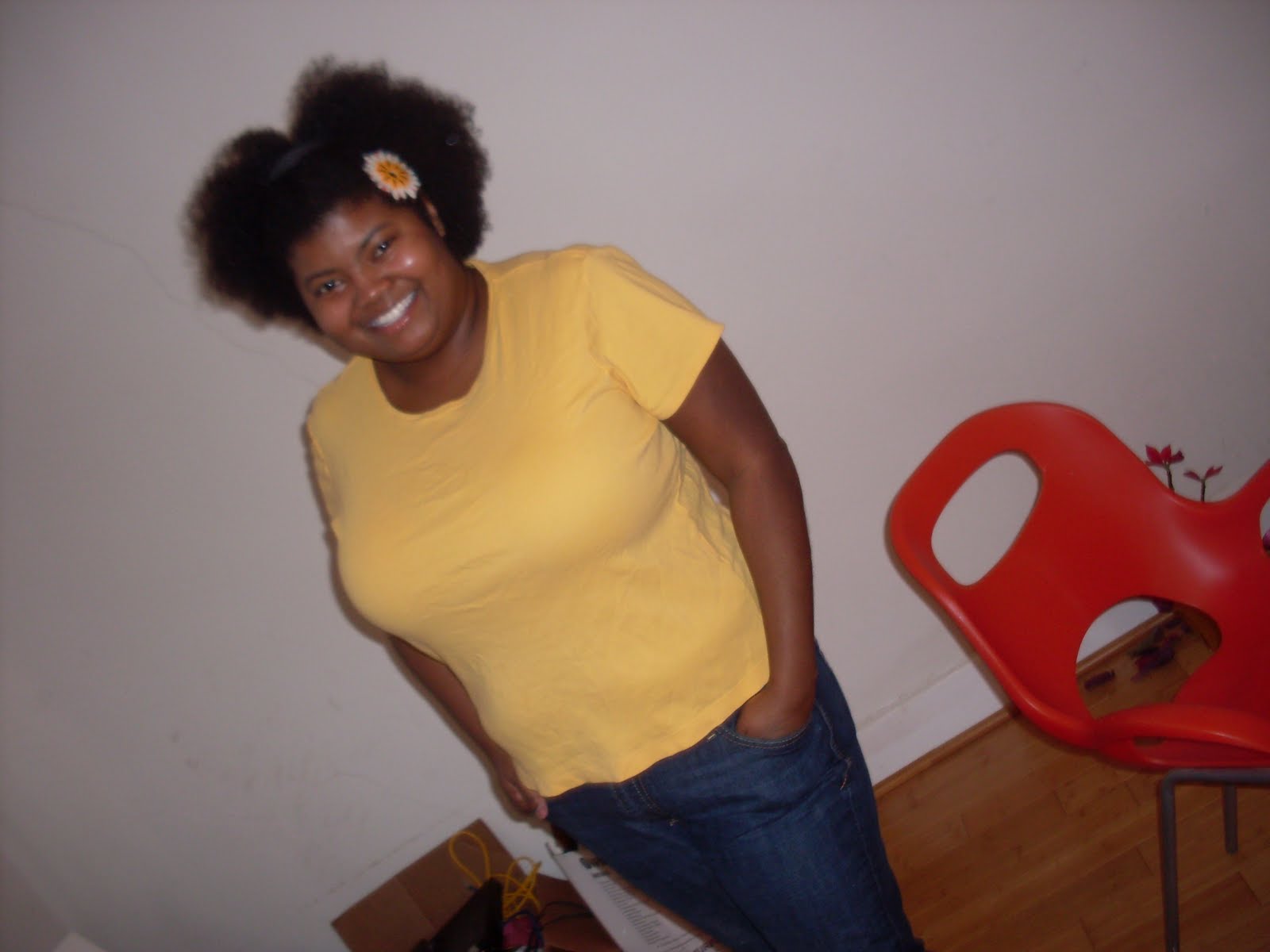
This is me on a good but average day.


I’m no girly-girl.  Some might describe me as a plane jane or even tom-boyish – mainly due to my preference for jeans or shorts, cotton tees, I love being outdoors, and getting dirty.  Don’t get me wrong. I clean up nicely, very nicely for the right occasion.
I guess this could be my Nerd Girls get-up.
But I’m not rocking high-heels and short skirts and sporting eye make-up on the average day.  That’s not me. 
And in science, there is a mix of us – uber fems, plain janes, and tom boys.   To be a fair feminist science scholar you recognize and embrace the whole continuum of feminine presence, not just the Barbie Doll version of it. That’s why I have a problem with this program; and I'm not the only one my Science Blogging BFF Oyster's Garter agrees.
Conceptually it is a great idea; however, please, don’t pass off this outreach effort for ALL girls/women. Why? Because off the wham I thought it was clear that “The not-so-popular girl, the cute but chubby girl, or even the smart but pimply faced girl - you know – the types of girls who most expect already do well in science and math and proud of their academic prowess” need not apply to be a Nerd Girl.

Saturday, June 19, 2010

Blogging While Brown about Science

Thursday, April 29, 2010

Diversity in Science Carnival # 9: All Shades of Green is up

Yes, it's a party!  Celebrating the people of Science and Engineering!
With April being the month we celebrate Earth Day, Arbor Day, and Environmental Education what better way to celebrate these Green activities than to celebrate the people who make Green happen.
Diversity in Science Carnival #9 - All Shades of Green.

Dianne Glave of Rooted in the Earth - a blog about Reclaiming the African American Environmental Heritage, hosted her very first carnival.  And I love her take on the theme - A 'Scratch-n-Sniff' Blog Carnival: "What does April (spring) smell like to you?"  Each submitter shares his/her story and blog post.

It's great.  Check it out and please leave a comment at each author's page.

Plus, be sure to join us for Diversity in Science Carnival #10: Shattering Stereotypes in STEM, hosted at Quiche Moraine. We are inviting all posts that challege pre-conceptions and mis-conceptions of who scientists/engineers are, what they look like, how they behave, what they do, etc. A cross-disciplinary examination of this issue is encourged and posts about everything from the merging of art and science or science and faith, to posts that highlight social life to how people from well-represented groups are strong advocates of diversity initiatives.


Submission deadline May 25. Carnival will post May 27.
Submit via this link.

Sunday, April 25, 2010

Travelog San Francisco: Protecting the Coastal Bay

When I was in San Francisco I did the tourist-y things.  I took the double-decker bus to Fisherman's Wharf, China Town, and the Golden Gate Bridge. I love the Bay.  I can see why people bit the bullet and pay the huge costs of living to call The Bay home.  I certainly would.


The Bay - the sea and land areas near it is a multi-use area.  Once a very important naval base for defense, The City's Naval history is still noticeable.  But people also enjoy tour excursions out on the water, visits to Alcatraz, plus recreational water sports.  It's an amazing place full of beauty and wildlife. 

Then I wonder, how does all of this human activity - this city and its water use and disposal of waste water, these vessels for transportation all coexist with the natural world. No doubt nature takes a hit, but who are the people and agencies responsible for being responsible?

As I was walking along the boardwalk, I came across this interpretive display.


It seems the gentleman mentioned at the bottom of the sign is responsible for Protecting the Bay, Mr. David Hayes - Project Manager.

Sometimes recognizing diversity in natural resource careers isn't so conspicuous, but it's always a great thing to discover...and share.

Saturday, March 20, 2010

Right under my nose: Dr. Rubye Torrey, Sister in Science

I met Dr. Rubye Torrey (yes, with an e) as an undergraduate student at Tennessee Technological University. I had seen in the University Center, walking along the Quad, in the Administration building and at football games. She was the Assistant Vice-President of Research at the University, but that meant nothing to me, although I was studying science and doing research with live animals. At the time I had absolutely no appreciation of research administration, research protocols, policies, animal care (IACUC), review boards ( IRB), or the role of administrators like Dr. Torrey – that would eventually occupy my days and nights as a graduate student. No, I officially met her for the first time on a blustery winter’s evening in 1994. I was attending an interest tea and she was the sorority advisor. She struck me as a very formal woman. She had a sweet face, but I immediately sensed she was no nonsense. I was quite right.

My three years under her tutelage and supervision in Xi Alpha Chapter of Alpha Kappa Alpha Sorority, Inc., were perhaps like anyone else’s who belonged to one of the Divine 9 organizations. With little exception, undergraduate sorority and fraternity members are adolescents: cocky, self-absorbed, indestructible, know-it-all-kids full of energy and excitement about belonging to a grand sister/brotherhood. We want to conquer it all. The job of these selfless, giving (and no nonsense) advisors is keep droves of crazed, impetuous, souls from running amuck, unintentionally despoiling our sister/brotherhood, and simultaneously prepare us to be responsible citizens who serve mankind – all for free. I cannot say I was better behaved (or appreciated how much a labor of love it is to be a graduate advisor), though my brand of cockiness was a more passive arrogance. I was brat, but I didn’t know it then. But that wasn’t the only thing I didn’t know.

I graduated from college, with a degree in Animal Science. I continue my studies and obtained a Master’s degree in Biology and I later went on to study at the doctorate level. Fast forward to March 2007. I’m sitting in a workshop at the National Science Teachers Association National meeting. I’m sitting next to a lovely woman, who favors my maternal grandmother. We strike up a conversation and I learn she is a Biology professor at Howard University -- Dr. Geraldine Twitty. I am beaming and excited. Never before had I had the opportunity to meet an African-American Woman who was scientist. She asked me about my educational background and schools I have attended. She then asks if I know Dr. Rubye Torrey. I immediately sit up, surprised that anyone else other than my sorority sisters know who DT is (as we called her). Dr. Twitty tells me that she and Dr. Torrey are long time friends, from Sigma Xi conferences of years past.

It hits me. Dr. Torrey is a scientist! It’s not like I didn’t know she wasn’t a PhD in Chemistry. Once she shared a story of her carrying a sulfate chemical on the bus in Nashville – where she was studying for her Master’s. But it just didn’t hit me, until this very moment. I had only known Dr. Torrey as my sorority advisor and not once did I give pause to ask what brought her to us or what academic and professional hurdles did she jump to be in a position to advise us. Not only did I never realize that she was the very first Black woman to earn a Ph.D. in Chemistry from Syracuse University (in 1963), but she was an upper-level university administrator. As the top science administrator on our campus she had to sign off on my undergraduate research project. Right under my nose, I had access to an African-American Woman Scientist and I never knew. It’s probably because at the time, I didn’t know I’d be where I am today – preparing for an academic career in science, following in the footsteps of Dr. Torrey. Now that I’m on this side of the path, I appreciate her more. She was thorough, effective, and sharp. My sorority sisters and I couldn’t get away with a thing. Nothing. But that’s precisely what makes one a great scientist and a great research administrator. If only I had known then what I now know: science is an endeavor of accuracy and precision. If one is thorough in one facet of life, it’s likely to carry over into others. Dr. Torrey was a consummate professional. It’s a real shame my adolescent stubbornness didn’t allow me to recognize her as the mentor she could have been and how much of an amazing scientists she is. I missed out. I missed out big time.


I learned more about Dr. Torrey, Dr. Twitty, and other women scientists from this amazing book:
It's a perfect book to learn more about the contributions of women to science and engineering

Additional online references to Dr. Torrey:
The Double Bind: The Price of Being a Minority Woman in Science, AAAS Report 1976.
Her engagement announcement from the Washington Afro-American, July 16, 1957

Wednesday, March 17, 2010

Understanding push-pull market forces and promoting science to under-served audiences

Whenever a news source or blog community claims to be a go-to source of information for African-American audiences, I take a quick look at the tabs or regular feature titles and I always find one major subject area lacking: Science.

To be fair, science coverage across all media outlets has been severely cut back. However, long before the threat of extinction of print media, Black Newspapers and Magazines didn't have much to offer in the area of science coverage. And when online media became more popular, the trend didn't change. Where's the science? Other than the occasional Black health update and the annual Black History Month profile articles, Black periodicals do not feature science news. The lone exception is if the article has a Black angle, in other words, if the article can be tied directly to issues that identify with the African-American community, such as disparity statistics or African-American firsts.

Acknowledging some past confrontations with research communities, there is a general uncertainty when it comes to science and science research within the African-American community. However, I don't understand how or why this has translated to an overwhelming lack of coverage of science-related topics altogether.

My time teaching science to inner-city high school students as a NSF GK-12 Fellow really opened my eyes to something every science communicator should understand: I needed to relate the information to them in a way they would understand and in a medium they would readily consume. As my efforts to share science with under-served audiences grew, I realized that I needed to carry my message to them, not wait for them to come to me.

A year ago I published two articles in the St. Louis American, a local Black weekly paper. These articles were well-received by the editor and the public. I was invited to submit more articles. I did. I saw writing for this news outlet as a chance to share interesting and relevant science with a general audience. I was carrying the message - science news - to them - a demographic that was probably not subscribed to other popular science media, but might be modestly interested in some general science topics. However, none of my other submissions were as eagerly accepted as my first two articles. I concluded that these latter articles may not have been as attractive because they lacked an obvious 'why it matters to Black people' angle. I never received any formal feedback for my submissions, so I'm not sure.

Although, I write about science issues in a way that (attempts to) directly engage (s) the African-American community, I felt dismayed by the perceived pressure to always 'African-American-ize' the stories. Race or politics or socio-economics factors aren't always the hook for Black audiences. Or is it? Perhaps it was my lack of skill in writing science-related articles for general audiences. I twice applied for the AAAS Mass Media Fellows Program and was twice turned down. I figured I needed to learn 'how' to write for general audiences in a professional manner. Again, I received to no feedback on my denial, so I concluded my interest in learning how to communicate science to target audiences was too narrow for AAAS, but I don't know.

So, I was left with my expertise in science and my passion for science outreach, yet no vehicle to deliver the message directly to my target audience. Then I read blog post by Bora that articulated all of deepest thoughts and feelings about this matter, emphasis mine.

The problem is with the "push" versus "pull" models of communication. Many scientists communicate well, but are only allowed by the mainstream media to use the "pull" model which attracts only those who are already interested in science. The examples of "pull" media for science are popular science magazines, news sections of scientific journals, science sections of newspapers, science blogs, science-related radio shows, science-related shows on cable TV, i.e., all those places where people have a choice to seek this information or bypass it.

It is the mainstream media that controls all the "push" venues - the most popular print, radio and TV venues that are seen by everyone and where science could, potentially, be mixed in with the news coverage of other areas of life, thus delivering science stories to people who otherwise would never seek them. And it is there that the scientists have no access, certainly no access on their own terms, and thus it is there where the science communication is blocked. Scientists communicate all the time, and do it well, but only to the already receptive audience which actively seeks them - in special sections, or self-made media, carefully quarantined away from the mainstream news. The corporate media
actively prevents the scientists from access to the non-receptive yet potentially interested audience.


Image credit: Everystockphoto.com


This so true. Looking specifically at this issue via an African-American or urban community lens, the pull forces are relatively weak compared to coverage about economics, politics, and celebrity gossip. However, outlets such as weekly Black Newspapers, Ebony/Jet, AOL BlackVoices or even BET TV and Radio One have amazing push power on their readership/listenership/viewership. Very large numbers people loyally tune into these media outlets and if they dared to include more science-related coverage people would consume it (and use it to inform their lives). Plus, it would make huge inroads to closing the science literacy gap (and eliminating anti-intellectualism) within some parts of the African-American community.

Just my thoughts,
DNLee

Saturday, February 27, 2010

Diversity in Science Carnival #7: Black History Month - Broadening STEM Participation at every level

Welcome to the 7th edition of Diversity in Science Carnival. This also marks the one year anniversary of the carnival. This carnival is all about the people, institutions and ideas that work to broaden participation of all people in the STEM field via education, research, public outreach, and good vibes in general. Broadening Participation of African-American audiences at every age, every level and over time is the theme that unites all of the posts submitted to this carnival. Thank you to all of the contributors.

Start them young!
A lesson well-learned by many who are dedicated to broadening STEM appreciation to African-American audiences is to reach them when they are young. One of my newest bestest blog friends is Rue Mapp of Outdoor Afro and she does just that. In A Day of Service: Celebrating the Legacy of Dr. King, she recaps time spent on a rainy MLK day doing ecological restoration with her young children .

She is definitely on the right track. Parents who provide positive STEM experiences really make important impressions on their children. As Roberta from Growing With Science Blog explains, in Meet a Scientist: Dale Emeagwali, Dr. Emeagwali decided to study science because her parents were such great informal educators and discovery mentors.

Today's Achievers in STEM
Ideonexus is becoming one of my favorite youth-centered computer science bloggers. He and his wife of TGAW essentially run a computer-science-after-school-club-internet-cafe for the kids in their Elizabeth City, NC neighborhood. He introduces his young charges, and us, to Dr. Clarence Ellis, the first African-American to earn an Ph.D. in comptuer science.


Dianne Glave writes about African-American participation in the environmental heritage movement. In Black Heritage Month, Buffalo Soldiers, and Shelton Johnson, she introduces us to Gloryland - a historical novel by NPS Park Ranger Shelton Johnson (you may have seen him on PBS Ken Burns National Parks) about Buffalo Soldiers and includes their participation in the founding of the National Parks System in the United States.

Under the Microscope collects stories from women involved with STEM with the goal of publishing a survival guide for young women in science. They submitted several posts for this edition of the carnival. First they provide a compiled a list of Notable black female scientists and innovators which includes Dr. Shirley Ann Jackson (Physicist), Ms. Valeri Thomas (Mathematician & Computer Scientist) and Dr. Patricia Bath (Opthalamlogical Surgeon).

Next they introduce us to Dr. Estella Atekwana, a biogeophysicist at Oklahoma State University in Geoscientist probes Earth for underground life and to Shaundra Daily, A Computer Engineer links computers, emotions and education. Both of these women do some incredibly interesting research. I'm personally glad for Under the Microscope for profiling so many scientists in the physical and mathematical sciences. I'm always eager to learn more and I'm a just as green about these subjects as some of the students I encounter in real life.

And if you didn't know, let me let you tell you, the most significant contributor to medical science and microbiology was an African-American woman. She cured polio, developed in-vitro fertilization technology, went into outer-space, and helped unlock the mystery of the HIV virus; but she wasn't a scientist. Deborah Lacks' immortal mother, born Henrietta Lacks, scientific name is HeLa cells, is the woman responsible for these and many more scientific breakthroughs.

Building Bridges & Making Allies
It is also important to remember the importance of alliances when broadening participating in STEM to under-represented groups. Greg Laden never fails to disappoint to unearth key points any dig (pun intended). His post, Race and National Bias in East African Palaeoanthropology shines light on this historical under-representation of [Black] Africans as professionals in East African Paleoanthropology and how the Leakeys (yes, those Leakeys) played a pivotal role in helping to remedy the disparity.

And BikeMonkey takes us there...literally. He responds stiffly to Eric Michael Johnson's Open Letter to the Animal Liberation Front and their Supporters via Things White People Love: Comparing Black People to Monkeys. He rips EMJ for comparing the unethical medical experimental on Blacks (born of the cruelty of slavery and Jim Crow oppression) to research done on animals, in particular to non-human primates. Speaking up - against inappropriate behavior AND for inclusion of others - is exactly what is needed to create a more diverse community in science and engineering.

Related to that, Philip Alcabes discusses Science, Race, and Silence surrounding the tragic events at the Biology Department of the University of Alabama - Huntsville. Many may not have realized it, but that department was a very diverse science department. Three people were lost in the tragedy, including two African-American professors. This event choked me up, too. I share my thoughts about the incident in my post The Black History Month Post I never wanted to write.

photo credit: NYTimes.com

This Diversity in Science Carnival Edition is dedicated to Dr.Gopi Podila, Dr. Adriel Johnson and Dr. Maria Ragland Davis and thoughts and prayers extended to the families of the victims, the alleged shooter and the entire University of Alabama-Huntsville community.

That concludes this edition. Submit your blog article to the next edition of diversity in science using our carnival submission form. It will be hosted by Wild About Ants and will celebrate
Women's History Month.

Wednesday, January 27, 2010

Diversity in Science Carnival #6: Perspectives on STEM Diversity and Outreach from ScienceOnline2010

Originally conceived as a Science Blogging conference for science bloggers in the Research Triangle, North Carolina (because obviously that little piece of real estate is the center of the science universe) it has expanded into something more, something grand, something viral. ScienceOnline is an international meeting of hearts, minds and modems of scientists, communicators, and students of all ages & levels who have at least two things in common – Science and the Internet.

I was scheduled to co-moderate a session about STEM Diversity, but was unable to attend for personal reasons (the dissertation). I was able to follow all of the proceedings online – which was the point of the entire conference: how to engage the public in science conversations using the internet. Many people think of science, technology, engineering, and mathematics as fields with too few women or people of color among the ranks. This is true for some fields and in some places. However, I can tell you that the ScienceOnline Community is dedicated to diversity and inclusion of traditionally under-represented peoples. This brings me to a very well made point by IrrationalPoint at Modus dopens On gratitude of science scholars, e.g. white males, who are actually decent and kind people who treat women and minorities like, well, regular people.

There were 5 sessions that discussed Diversity and Outreach – the hurdles, the successes, and new directions.
· Casting a wider net: Promoting gender and ethnic diversity in STEM (I was supposed to co-moderate this one)
· Talking Trash: Online Outreach from the Great Pacific Garbage Patch
· Citizen Science
· Citizen Science and Students
· Science Education: Adults
· Martin Luther King, Jr., Memorial Session: Engaging underrepresented groups in online science media.
At first I thought this session and the Casting a wider net session were redundant. But co-moderator and college professor/administrator Abel Pharmboy presents this topic in a new and compelling way in his post #scio10 Martin Luther King, Jr. Memorial Session: Engaging Underrepresented Groups in Online Science Media

Janet D. Stemwedel of Adventures & Ethics in Science seemed to be everywhere at once. She seemed to have attended every one of these panels and live-tweeted like crazy. She recaps her tweets:
· #scio10 aftermath: my tweets from "Martin Luther King, Jr., Memorial Session: Engaging underrepresented groups in online science media".
· #scio10 aftermath: my tweets from "Talking Trash: Online Outreach from the Great Pacific Garbage Patch".
· #scio10 aftermath: my tweets from "Casting a wider net: Promoting gender and ethnic diversity in STEM".
and also offers thought-provoking summaries from the sessions as well:
· scio10 aftermath: some thoughts on "Casting a wider net: Promoting gender and ethnic diversity in STEM"
· #scio10 aftermath: some thoughts on "Talking Trash: Online Outreach from the Great Pacific Garbage Patch".

Greg Laden, who is always a slice of heaven, gives a very good overview of all of the sessions he attended, which included the Citizen Science session and the MLK Memorial Session in #scio10 Science Online 2010 recollections and reflections on the sessions I attended.

And one of my newest blog friends, Vicky of TGAW (and I’m really sad I didn’t attend and meet her) had me in near tears with her post Science Online 2010 and the Neighborhood Kids – Community and Role Models. This summary is one of my very favorites from the conference. Vicky and her husband Ryan of Ideonexus, completely embody the heart and soul of casting a wider net in STEM. She weaves personal accounts of their experiences with teaching, providing laptops, and free internet access to the neighborhood kids as she summarizes the sessions related to diversity and outreach. Ryan's summaries were on point, too.

· Science Online 2010: Martin Luther King, Jr. Memorial Session: Engaging Underrepresented Groups in Online Science Media
· Science Online 2010: Casting a Wider Net: Promoting Gender and Ethnic Diversity in STEM

Last, but certainly not least is Dr. Isis’ account of online diversity and inclusion in her always straight-forward and provoking way. MLK Day, Blogrolling, and Protecting Your Brand briefly summarizes her take home points from the MLK Memorial Session and how African-American and Latino Americans are over-represented in the mobile tech markets. Everyone who attended that session noted this and all agreed that IF we are serious about engaging these audiences in STEM, then we must meet them in their preferred social media space….Hmm…That has me thinking – Urban Science Adventures! © on a Blackberry, iPod, or mobile phone near you….

Finally, Dr. Isis is reminded by one of her readers, and in turn reminds us all, that Including Disability in Diversity Discussions #scio10 is equally important. I admit to dropping the ball on this one, not because it isn’t important, but because of my lack of experiences. So, this carnival will also highlight Inclusion efforts and role models of people with disabilities in STEM.

Be sure to check out the video mash up of the ScienceOnline 2010 conference.


Science Online 2010 Flickr/Picasa mashup from Graham Steel on Vimeo.

See you next month for Black History Month! Submissions can be made here. Carnival will be posted February 27, 2010.


Monday, January 25, 2010

Open Laboratory: The Best Writing on Science Blogs 2009 Edition

With the decline of science journalism and just good science writing in traditional media altogether, someone hatched the idea to pluck out the best science writing online and put it into a printed book. In 2006, a community of science bloggers, many from the SEED sponsored collective known as ScienceBlogs put words to action and the first anthology of blog posts showcasing the quality and diversity of writing on science blogs was created and it was named Open Laboratory: The Best Writing on Science Blogs.

I submitted two essays and one was selected by a panel of judges for Open Laboratory 2009, an anthology of the best science blogging for the year. Only 50 posts were selected per year and I am told it was a very competitive selection process, with an unprecedented 760 entries submitted this year. Whew, that was some very, very stiff competition and the selected works are amazing in range and topical diversity. I am indeed head-over-heels excited to have been selected, thanks Scicurious (edition editor), Bora (anthology editor), and Open Lab judges (referees). The submissions will be sent off to the publishers and available to buy. The 2006, 2007, and 2008 editions are available to purchase, and the 2009 version will be available later this spring.


My blog post “The Rightful Place of Science in Society and the African-American Community”, originally posted at YBPGuide and also published in the 2009 Black History Month edition of the St. Louis American weekly newspaper. Below is the essay, with revisions for the upcoming 2009 Open Laboratory Anthology.

*******
In President Barack Obama’s Inauguration Speech on January 20, 2009, he vowed “to restore science to its rightful place” in society. Wow, that fills me with an excitement and eagerness to do and share science more than before, particularly to audiences that have long been under-represented in science. I ask myself, “What is science’s rightful place in society? Furthermore, what place should science have in the African-American community?”

There has been a long and understandably uneasy relationship between the Black Community and Science. Being regarded as less-than-human by other groups has put many of our fore-parents in harm’s way. I could speak volumes about unethical medical research and heartless medical providers; acknowledging the pain of the past is important. However, in order to move forward me must also accept that “this is a new day”, as Obama declared. It is time to restore Science – the offspring of Education and Intellectualism – to its rightful place in the African-American community.

The rightful place of science in our society and in the African-American community is within us. Science rightfully belongs to us, the people. It is not some mysterious activity done by others. In fact, many of the greatest scientists of all time came are also African-American: Dr. Charles H. Turner – Zoologist, Dr. Edward Bouchet – Physicist & the first Black American to earn a Ph.D., George Washington Carver – Agriculture Scientist, Dr. Neil deGrasse Tyson – Astrophysicist & Director of the Hayden Planetarium, Dr. Mae Jemison – Physician & NASA Astronaut, Dr. Ian Smith - Physician, Dr. Shirley Jackson – Nuclear Physicist & President of Rensselaer Polytechnic Institute, Dr. James Gates - Physicist, Dr. Shirley Malcolm – Ecologist & Head, Education and Human Resources of the American Association for the Advancement of Science, and Dr. Maydianne Andrade – Behavioral Ecologist.

In order to restore science to its rightful place, we must first acknowledge what science is. Science is a pursuit of knowledge. It drives us to question, to critique, to hypothesize, to measure, to evaluate, to interpret, and to propose solutions to the most pressing needs of our communities. It is an exercise of intellect, discipline and curiosity that compels us to want to understand our world and to make it better. Science is simply information about our world, our environment, and our health.

Science is the handiest of tools in our arsenal against discrimination, poverty, hunger, socio-economic disparity and environmental injustice. People’s lives are impacted by information, and failing to comprehend information can be very detrimental. Many have paid the price of ignorance and misinformation. I have personally witnessed the heartbreaking consequences of scientific illiteracy within the African-American community, such as individuals deciding to forgo life-saving medical procedures, not following a doctor’s health advice, or moving into environmentally hazardous buildings. Many people have confused superstition as fact and shared false information about health or medical issues. We come to depend heavily on the advice of well-spoken, sometimes well-meaning celebrities and nationally-syndicated radio personalities. They share information that they believe to be true, but they are often under-informed.

Restoring science to its rightful place requires a dedication for every single citizen to become scientifically literate, to understand science, and use it to enhance our lives. Moreover, this restoration must include people who have been under-served and under-represented in science for too long. One way to achieve this is to integrate science into our everyday lives. One barrier to this is the fact that many of our social circles do not include scientists or doctors so we have no one to call when questions arise. Imagine how much more informed we would be if more people had access these experts. How much better would our lives be if science were a part of the decisions we made about our health, our children, and our environment?
The rightful place of science is in the social commentary of popular speakers, in our day-to-day dialogue with friends and family, at our dinner table, happy hour gatherings, within the banter of men in barber shops and among the chatter of ladies in hair salons. It is time to restore science in the African-American Community.

Sunday, December 27, 2009

Planting seeds of science interests in kids of all ages

Let’s say you’re the parent/mentor/teacher/tutor/friend of a kid super-excited about some aspect of science, technology, engineering or math (STEM). You want to nurture that interest and keep that child engaged, especially during the dull times of school breaks, after-school and perhaps even for school-related projects. Whether you’re an educator or not, sometimes an adult needs reinforcements to help a child or teen find his/her own interest path.

Fostering science, math, and engineering interests in young people is the goal of several organizations, including many of our nation’s publicly funded agencies like NASA and NSF. Informal science education programs and institutions run the range. Some supplement traditional K-12 education lessons. Some provide opportunities for families to spend time together, learning, exploring, and having fun. And still there are some that specifically target under-served audiences to introduce them to pioneers and exciting career opportunities.

STEM Outreach Programs that rock!

2009 was definitely the year science initiatives! It was hailed as
* The Year of Science – with each month focusing on a different science topic;
* The Year of the Gorilla – to raise awareness of the threat of extinction to this beautiful primate;
* The Year of Darwin – to celebrate the 200th year of Charles Darwin’s birth and 150th anniversary of the publication of his book; and
* The Year of Astronomy – to celebrate one of the oldest fields of science

To help spread the word of these science initiatives, Science Cafes really took off, especially here in the United States. Often hosted at fun meeting places like restaurants where pizza and beverages are served, people can meet local scientists and learn about interesting topics. Since local communities organize these events, the topics might be related to science initiatives or any other hot topic in the news like sports, herbal medicine, love or health.

But my absolute favorite science outreach efforts are the hands-on organically-grown science and nature outreach programs in individual communities. Here in St. Louis, Missouri, I’ve been involved in a few. My most recent experience was this past summer in the Forest Park Summer Youth Program with Boys & Girls Club kids.

Ocean Discovery Institute of San Diego, California, (formerly Aquatic Adventures) is an awesome program! Diverse young people from this very urban community are engaged in science exploration marine research, and environmental conservation education. This happens to be one of my dream jobs.

Plus, the 2010 San Diego Science Festival sounds like it will be the most anticipated science showcase of greater San Diego. Offering a wide variety of programs and events inspire all ages, “with a special focus on building a pipeline of future scientists and STEM thought-leaders” – festivities include supplemental K-12 Programs, Scientist Speakers series at local schools, a science Exposition, and Scientists in Residence Program. College student scientists represented from disciplines such as Biomedicine, Pharmacology, Engineering, Green Technology, Oceanography, and Astrophysics will work in partnership with San Diego county schools for 6 weeks and create joint project that will be showcased in the 2010 Festival.

Science Chicago hosted the world’s largest science celebration. Being the home of several private businesses like Alberto Culver and institutions like the Shedd Aquarium, all of Chicago had a chance to get a closer look into how science impacts our lives and our health.

I recently discovered ME4E – Multidisciplinary Education for the Environment – also out of the Chicago, Illinois. This organization provides outdoor hands-on activities for schools, scouts, and public groups to learn more about ecology and local wildlife. They seem to have a full calendar of events such as bird counts, wildlife watching, making cast of animal tracks, wetlands and woodlands lesson plans, and urban gardening programs.

The Harris Foundation Summer Science Camp is a free, academic program offered in over 20 different cities in the United Sates. Middle school students participate in a variety of recreational, social, and STEM educational activities at local college campuses. Founded by Dr. Bernard Harris, it is designed to support historically underserved and underrepresented students with limited opportunities.
Finally, no matter where you live, here is a program for any student in 3rd- 6th grade. Pulse of the Planet Kid’s Science Challenge is a nationwide competition for kids to submit experiments and problems for REAL scientists and engineers to solve. The website is also a fun place to play science games, watch videos, and enter to win awesome prizes and trips! Plus, the site also offers educator resources for teachers and parents, such as pod casts and downloadable curricula.

Related Posts with Thumbnails